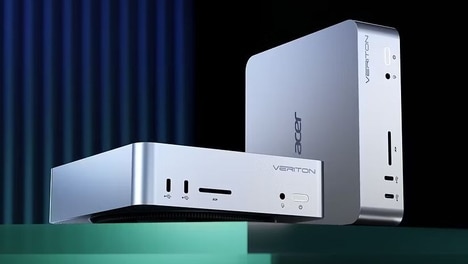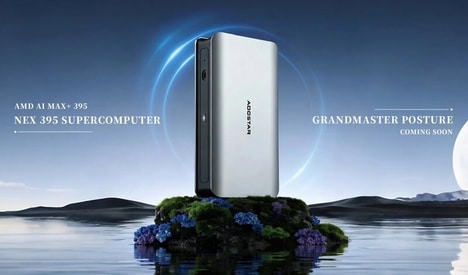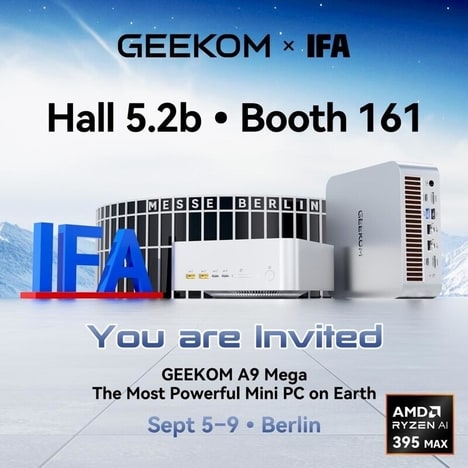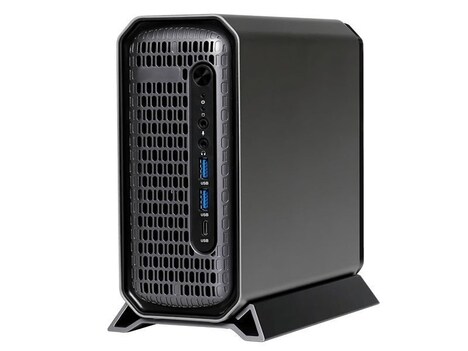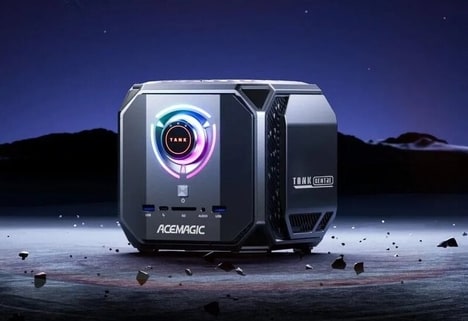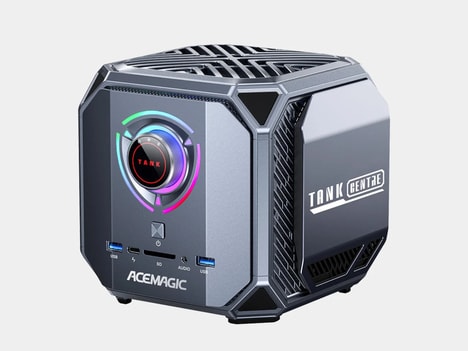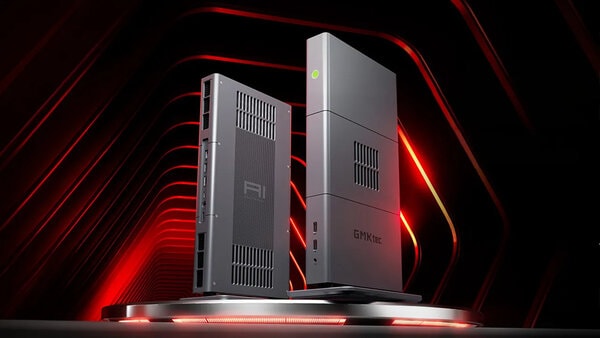
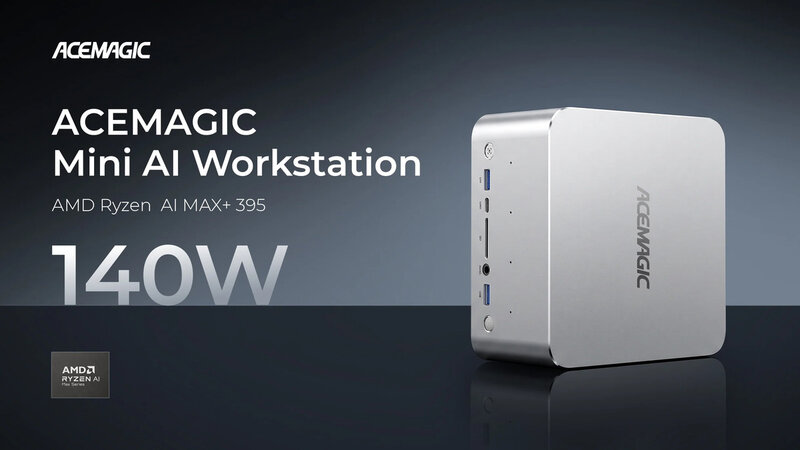
Acemagic introduced the F9A, a 2-liter mini workstation designed for AI developers and creative professionals. The system is powered by AMD’s Ryzen AI Max+ 395 processor, combining 16 Zen 5 CPU cores, Radeon 8060S integrated graphics and an XDNA 2 NPU, with up to 126 TOPS of total system compute.
The CNC-machined aluminum chassis supports up to 128GB of LPDDR5X-8000 unified memory and two M.2 PCIe 4.0 NVMe storage slots. Connectivity includes an OCuLink port operating over PCIe 4.0 x4 for external GPUs, dual 40 Gbps USB4 ports, dual 2.5 GbE, Wi-Fi 7 and Bluetooth 5.4. The F9A also includes a physical Copilot button, far-field microphones, built-in speakers and an RGB ambient light ring.
For users running local AI and demanding creative workloads, the F9A combines workstation-class compute and expansion options within a compact desktop footprint.
Image Credit: Acemagic
Why This Trend Is Growing
- Compact AI Workstations
- Small-form-factor systems with high TOPS performance create room for localized AI development in space-constrained professional environments.
- On-device AI Compute
- Integrated NPUs and unified memory architectures are reshaping how creators and developers run advanced models without depending on cloud infrastructure.
- Expandable Mini Desktops
- External GPU support, high-speed USB4, and modular storage give compact PCs a flexible path toward workstation-grade performance.
Industries Being Reshaped
- Professional Computing
- Mini workstations are redefining enterprise hardware expectations by combining portability, power efficiency, and advanced AI acceleration.
- Creative Technology
- High-performance compact desktops provide media professionals with localized rendering, editing, and generative workflow capabilities in smaller studio setups.
- Artificial Intelligence Hardware
- Processor platforms that merge CPU, GPU, and NPU resources signal new competition in edge-ready AI development machines.