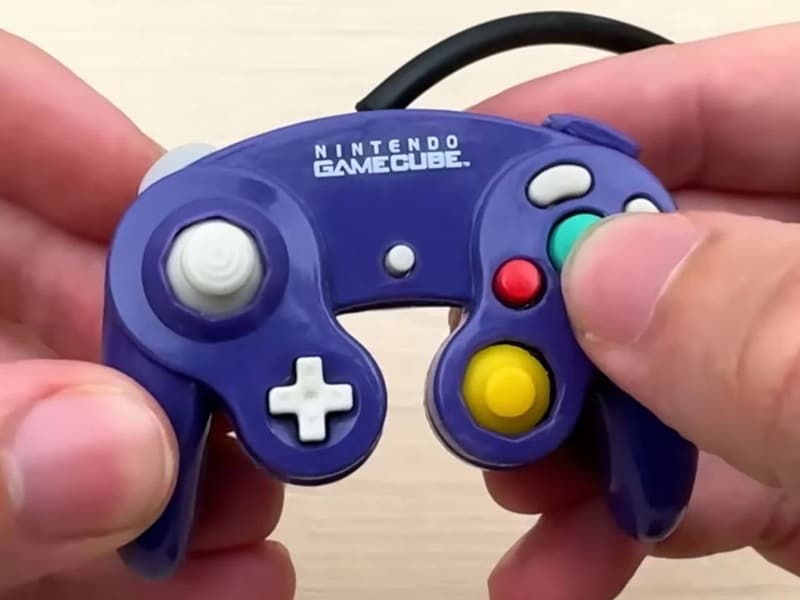
Mini GameCube Controller is a DIY project created by YouTuber Crux that transforms a decorative GameCube controller keychain into a working gaming peripheral. Starting with a Backpack Buddies GameCube controller keychain, the maker modified the miniature shell to accommodate functional electronics without significantly altering its original appearance. The project required extensive internal machining to create space for custom components, resulting in a controller small enough to remain attached to a keyring while retaining recognizable GameCube proportions.
The unique and compact build incorporates 3D-printed joysticks, buttons, and a D-pad mounted over surface-mount tactile switches. An RP2040-Zero microcontroller from Waveshare handles input processing and runs custom firmware that enables native GameCube controller functionality. Ultra-thin enameled wiring connects the controls to the internal electronics, and a salvaged GameCube cable provides compatibility with original hardware.
Image Credit: Crux
What Makes This Trend Stand Out
- Pocket-sized Peripherals
- Ultra-compact accessories are turning decorative objects into fully usable devices, creating room for novelty-first hardware that blends portability, utility, and fandom.
- Retro Console Customization
- Nostalgic gaming formats are gaining new relevance through DIY electronics, opening possibilities for personalized peripherals that extend the life of legacy systems.
- Disguised Functional Gadgets
- Everyday collectibles with hidden technical capabilities are redefining product expectations, with miniature shells becoming platforms for embedded controls and interactive features.
Sectors Adopting This
- Gaming Accessories
- Miniaturized controllers introduce a niche for highly portable input devices that serve collectors, retro gamers, and novelty-focused consumers.
- Consumer Electronics
- Compact microcontrollers and custom firmware are enabling small-format gadgets that deliver practical functionality without sacrificing playful design.
- Maker Hardware
- Accessible components such as 3D-printed parts, tactile switches, and RP2040 boards support a growing market for creator-led hardware experimentation.