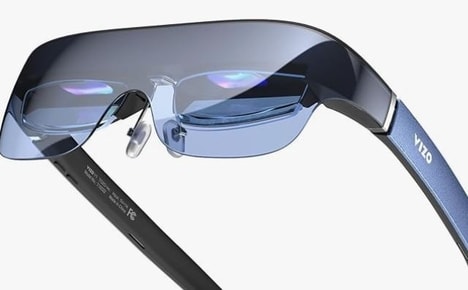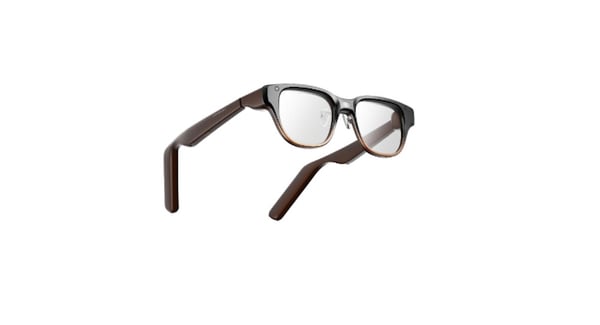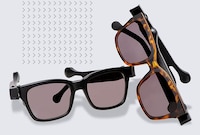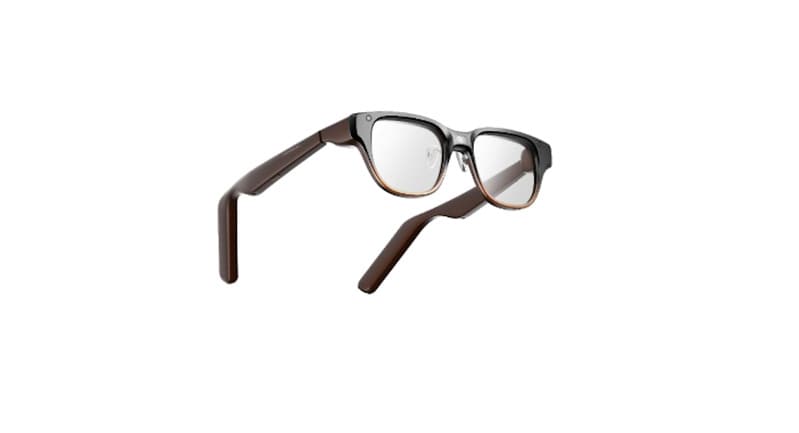
The new Lenovo AI Glasses Concept is a wearable technology prototype unveiled at CES 2026 that explores hands-free interaction through integrated displays and artificial intelligence. The glasses project digital information directly into the user’s field of view, allowing access to notifications, contextual prompts, and visual overlays without relying on a smartphone screen. Voice commands and gesture-based inputs are used to navigate functions, while onboard sensors track head movement and environmental context to adjust displayed content in real time.
The lightweight frame is designed for extended wear, balancing optical components, battery placement, and processing hardware within a minimal form. Connectivity with external devices enables the glasses to support productivity tasks, translation, and real-time assistance across different environments. The concept emphasizes situational awareness and reduced screen dependence, positioning the glasses as an experimental interface for future AI-driven wearables rather than a finished consumer product.
Image Credit: Lenovo
What Makes This Trend Stand Out
- Hands-free Interfaces
- Evolving AI integration allows for seamless interaction via voice and gestures, eliminating physical device dependency.
- Augmented Reality Overlays
- Projecting digital information directly into the user's view transforms how individuals interact with their environment by enhancing situational awareness.
- AI-driven Contextual Adaptation
- Utilizing sensors for real-time environmental and movement tracking tailors digital interactions to user context for an optimized experience.
Sectors Adopting This
- Wearable Technology
- Innovations in AI glasses are redefining the boundaries of personal computing interfaces with hands-free, real-time integrations.
- Augmented Reality
- The development of smartglasses is accelerating the adoption of digital overlays that enrich physical world interaction and perception.
- Artificial Intelligence
- Advances in AI contextual processing are opening new avenues for predictive analytics and personalized user experiences in wearable devices.