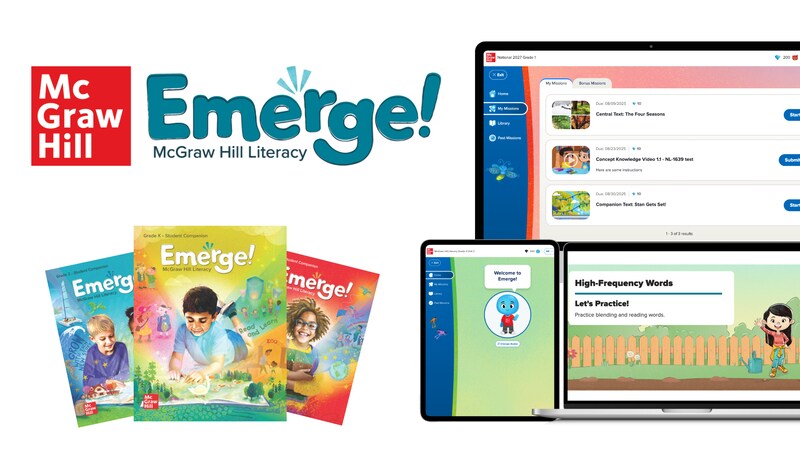
McGraw Hill's Emerge! is a new K-5 English Language Arts curriculum designed to transform early literacy education through evidence-based instructional methods. This comprehensive program integrates decades of cognitive science research on how children learn to read. It combines structured phonics instruction with personalized learning tools to support diverse classroom needs.
Emerge! was developed in collaboration with 16 literacy experts and informed by feedback from over 6,400 educators and administrators. The K-5 English Language Arts curriculum emphasizes foundational skills like phonemic awareness while incorporating advanced elements such as critical thinking and analytical writing. A key innovation is its data-driven approach as real-time analytics from student activities and assessments help teachers tailor instruction through targeted small-group sessions, independent practice modules, and scaffolded support. The program also features professionally vetted, multi-genre text sets that connect literacy development with science and social studies content.
Image Credit: McGraw Hill
What Makes This Trend Stand Out
- Data-driven Education
- The integration of real-time analytics to tailor teaching methods represents a shift towards personalized education, enhancing learning outcomes through targeted instructional strategies.
- Interdisciplinary Curriculum Design
- Connecting literacy development with subjects like science and social studies reflects a growing trend towards holistic education, preparing students with versatile skills.
- Cognitive Science Integration
- Incorporating decades of cognitive science research into curriculum development is revolutionizing the way educators approach early literacy, maximizing learning potential based on how children process information.
Sectors Adopting This
- Edtech
- The emergence of personalized learning tools and real-time analytics in Emerge! signals a rapid evolution in educational technology, reshaping traditional classrooms with adaptive learning technologies.
- Publishing
- Innovative integration of multi-genre, professionally vetted texts in curricula underscores an opportunity for the publishing industry to develop educational materials that align with interdisciplinary teaching.
- Professional Development
- As new instructional methods are incorporated into curriculums, ongoing professional development becomes crucial for educators, spawning an industry focus on training for data-driven and personalized education systems.