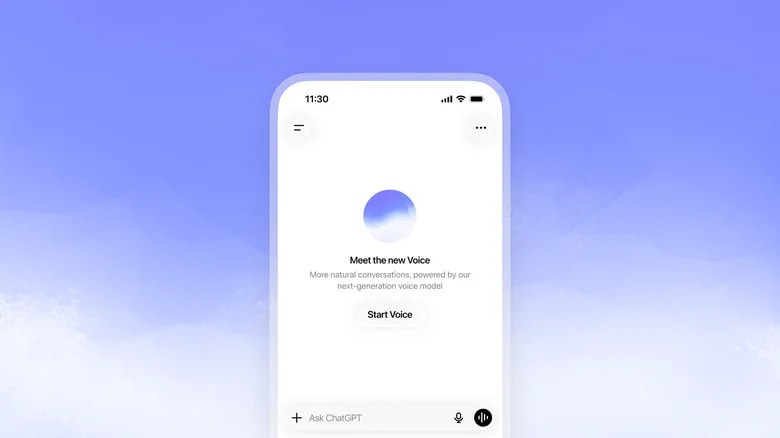
The GPT-Live-1 and GPT-Live-1 mini introduce a new generation of voice models for ChatGPT built on a duplex architecture that allows simultaneous listening and speaking during conversations. Unlike earlier turn-based voice interactions, the models support more natural dialogue by handling interruptions, responding without waiting for complete silence, and providing verbal acknowledgements while users are speaking. The system can also delegate complex requests to other OpenAI models for reasoning, web searches, or additional agentic capabilities while maintaining the conversation. The rollout begins across Android, iOS, and the web.
The voice experience includes adjustable speaking speed, improved performance in noisy environments, and support for generating visual cards for topics such as weather, sports, and financial information. Image uploads, file analysis, and web search remain integrated into the feature. OpenAI has also introduced additional safety measures that can redirect unsafe conversations, display safety guidance, or end higher-risk voice sessions when necessary.
Image Credit: OpenAI
What's Driving This Trend
- Duplex Voice AI
- Simultaneous listening and speaking enables more fluid human-machine conversations, creating openings for real-time assistants that handle interruptions, overlaps, and natural dialogue flow.
- Multimodal Voice Interfaces
- Voice systems that combine speech, visual cards, image uploads, file analysis, and web search expand the potential for richer service experiences across mobile and web platforms.
- Safety-aware Conversational AI
- Built-in safeguards that redirect unsafe dialogue or end risky sessions signal new possibilities for trusted voice tools in sensitive consumer and enterprise contexts.
Who This Affects Most
- Customer Service
- Always-on voice agents with natural interruption handling could reshape support operations by making automated interactions feel faster, more responsive, and less scripted.
- Mobile Applications
- Integrated conversational voice across Android, iOS, and web environments creates room for app experiences centered on hands-free navigation, personalized assistance, and contextual information delivery.
- Financial Services
- Voice-enabled access to financial information through generated visual cards and web-connected responses points to more conversational ways of delivering market updates, account insights, and advisory support.