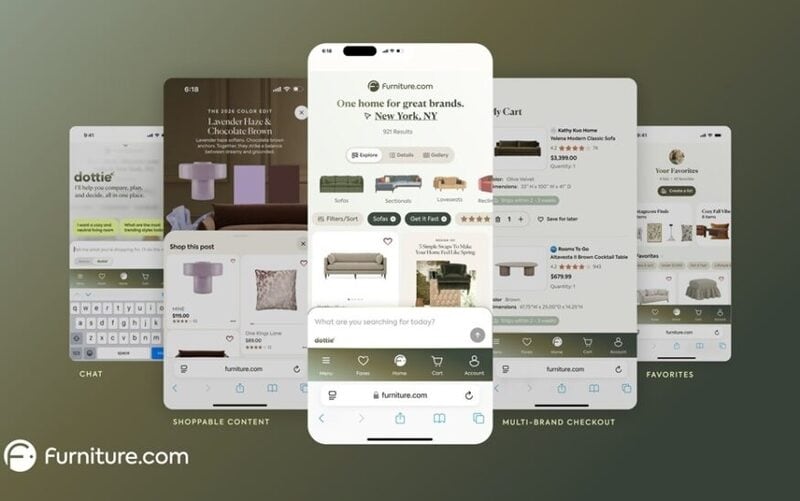
Furniture.com has launched a new AI-powered furniture comparison that allows shoppers to discover, compare, and purchase furniture from multiple trusted brands in a single transaction. The goal of this service is to consolidate the entire decision process into one streamlined experience.
Furniture.com's AI-powered furniture comparison platform features advanced conversational search that mirrors how people naturally plan rooms, alongside standardized product specifications, transparent pricing, and lifestyle imagery to help buyers understand trade-offs and make confident choices. A groundbreaking multi-retailer checkout enables customers to place items from different brands into one cart while preserving each retailer's fulfillment options and customer relationship. For shoppers, this means reducing the average fifteen hours of research time and moving from consideration to purchase with greater certainty,
Initial partners for Furniture.com's AI-powered furniture comparison platform include Rooms To Go, Raymour & Flanigan, and Z Gallerie, and dozens more are joining weekly.
Image Credit: Furniture.com
Why This Trend Is Growing
- Unified Multi-retailer Checkout
- A single-cart purchase experience that preserves distinct retailer fulfillment and relationships could redefine cross-brand transactions and lower friction for high-consideration purchases.
- Conversational Visual Search
- Natural-language, room-focused search combined with lifestyle imagery enables shoppers to explore design trade-offs visually and semantically rather than through traditional keyword catalogs.
- Standardized Product Specifications
- Uniform spec sheets and transparent pricing across brands make direct feature and quality comparisons possible, shifting competition toward clear value metrics.
Industries Being Reshaped
- Furniture Retail
- Retailers integrating AI-driven comparison and multi-brand checkout could transform showroom and online experiences into curated ecosystems that emphasize interoperability and trust.
- E-commerce Platforms
- Marketplace and platform providers benefiting from conversational search and unified carts may enable new monetization models based on aggregated transactions and conversion efficiencies.
- Logistics and Fulfillment
- Distributed fulfillment orchestration for single-cart, multi-vendor orders introduces opportunities for dynamic routing, consolidated delivery windows, and shared last-mile solutions.