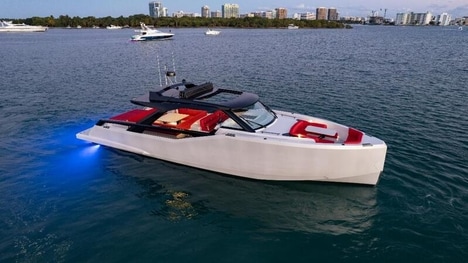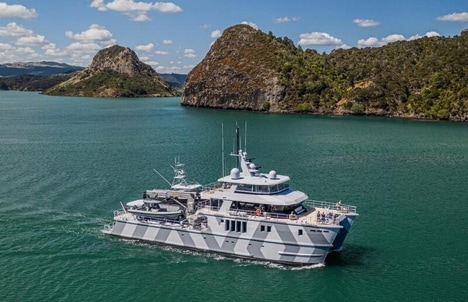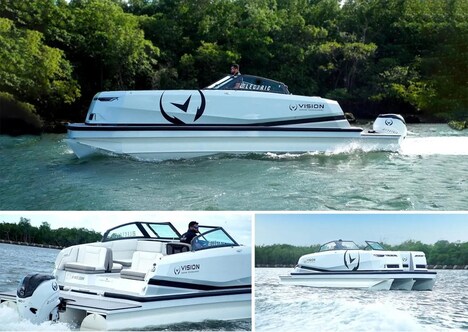
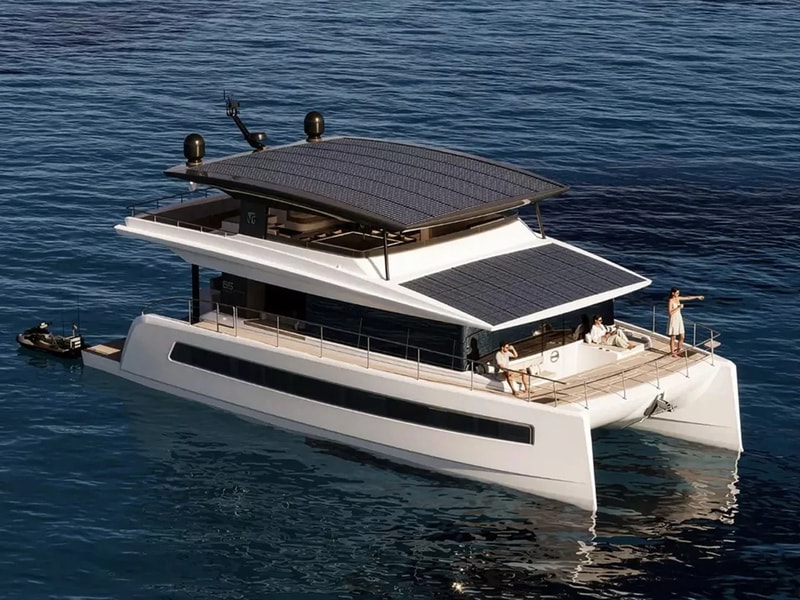
VisionF Yachts introduced the 65 Hybrid catamaran, a 19 m (62 ft) watercraft that blends diesel power with an electric propulsion system, featuring 450 hp Volvo Penta D8-450 engines alongside a dual-battery setup. The model was presented by Tuzla, Istanbul–based VisionF as the brand’s first sub-80-foot offering, built in GRP composite rather than the aluminium used on its larger models.
The 65 Hybrid pairs a 30 ft beam with spacious interiors that sleep eight guests across four cabins plus crew quarters for four, and a large salon framed by expansive glazing. Its hybrid system includes 101 kWh and 23 kWh batteries charged mainly by 42 rooftop solar panels, managed by an integrated energy-management system.
As a demo model aimed at buyers, the 65 Hybrid signals a move toward more compact, efficient luxury yachts, offering quieter electric cruising, customizable technical layouts and finishes, and a reduced operational footprint that aligns with rising demand for eco-conscious leisure craft.
Image Credit: VisionF Yachts
Key Themes Behind This Trend
- Hybrid Propulsion Adoption
- A growing shift toward diesel-electric powertrains in leisure vessels can enable quieter operations and lower fuel consumption that redefine performance expectations in mid-size yachts.
- Solar-integrated Yachts
- Rooftop photovoltaic arrays paired with sizable battery banks are enabling substantially longer electric cruising ranges and reduced generator use for day-to-day onboard systems.
- Compact Luxury Yachting
- Demand for sub-80-foot vessels offering expansive interiors and premium finishes is altering the market by concentrating high-end amenities into more space-efficient hulls.
Where This Applies
- Marine Manufacturing
- Advances in composite construction and integrated propulsion architectures are creating opportunities to produce lighter, more efficient hulls with modular technical layouts.
- Luxury Hospitality Charters
- Eco-conscious charter clients are driving interest in quieter, lower-emission vessels that change expectations for onboard guest experiences and itinerary planning.
- Clean Energy Systems
- Energy-management integration between solar arrays, multi-size battery banks, and hybrid engines is enabling novel system designs focused on optimized energy flows and reduced reliance on fossil fuels.