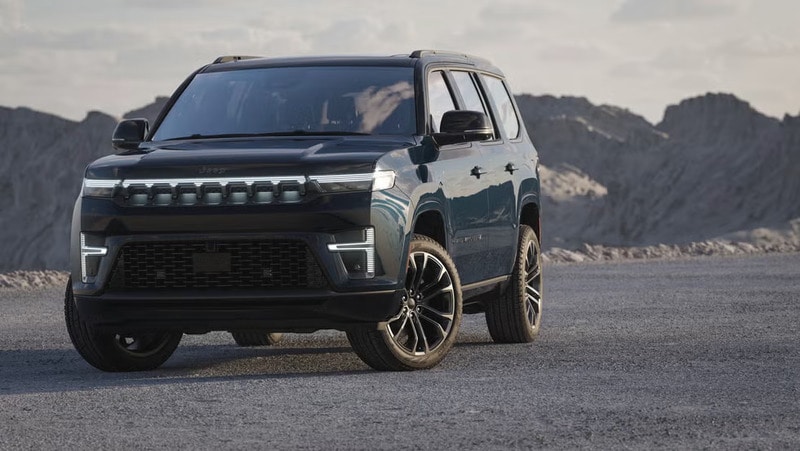
The 2026 Jeep Grand Wagoneer introduces several significant updates to the brand's full-size SUV, including a revised exterior design, a simplified model structure, and a new electrified powertrain option.
A notable change is the consolidation of the lineup under the single Grand Wagoneer nameplate, with all models now featuring prominent Jeep branding. The vehicle's styling has been refreshed with a new front fascia, full-width lighting elements, and a chrome-free aesthetic. These sensibilities are complemented by a range of new wheel designs. Under the hood, buyers of the 2026 Jeep Grand Wagoneer can choose between an award-winning twin-turbo gasoline engine and a new range-extended electric vehicle (REEV) system. This REEV powertrain combines a battery pack with a gasoline engine that functions as a generator, promising substantial horsepower and torque alongside an estimated driving range exceeding 500 miles. This represents the first application of this technology in the American market.
Image Credit: Jeep
What Makes This Trend Stand Out
- Electrified Powertrains
- The development of range-extended electric vehicle systems offers a hybrid approach, combining electric and gasoline capabilities for increased driving range and efficiency.
- Consolidated Model Lineups
- Streamlining product lines under a single nameplate simplifies consumer choices and can lower manufacturing complexity and costs.
- Minimalist SUV Aesthetics
- The new trend of chrome-free and clean SUV design reflects a shift towards understated luxury and modern styling.
Sectors Adopting This
- Automotive Industry
- Advancements in electric vehicle technologies and powertrain innovations are pushing the automotive industry towards more sustainable and efficient solutions.
- Battery Manufacturing
- The integration of new battery technologies in range-extended electric vehicles signals growing opportunities in the battery production and supply chain sectors.
- Automotive Design
- Evolving aesthetic preferences highlight the increasing importance of vehicle design in capturing consumer interest and differentiating brands in a competitive market.