




Olfactory Packaging
Anton M. Steeman — January 25, 2008 — Lifestyle
References:
Olfactory to improve taste
What people think they taste is solely the result of inhaling odours. The tongue recognises only the five basic taste varieties. All other tastes are the result of odours. Odours enter, to put it simply, the nostril to the nasal cavity, where they are detected by the olfactory receptors and after that translated by the brain into tastes. The person gets the perception that the aroma he smells will be the taste he is ready to experience.
That's why a seducing aroma tells a consumer he wants the product. If consumers are let the choice, 80% will choose the product he can see as well as smell. With 70% of the purchase decisions made in the supermarket aisles it is time for the consumer product manufacturers to incorporate the olfactory sense with the visual and tactile ones.
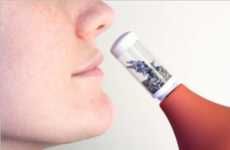
The olfactory packaging refers to the packaging which activates the sense of smell. Stirring these emotional senses might have as goal seducing the consumer to buy, but on the other hand in a pre-programmed form initiate a quality and/or aroma improvement leading to a better taste of the product to be consumed.
Smelling systems
The cosmetic and personal care industries certainly have mainly interest in seducing the consumer. At this moment roughly three systems are known, which give a fragrance to the packaging.
With exception of the scratch-and-sniff labels, where some activity of the consumer is required and some modesty the rule, all other technologies are based upon free-flowing encapsulated aromas or fragrances, to stimulate the consumer to make the purchase decision.
Never ever will there be a supermarket owner allowing his shop to be stacked with ´smelling´ packages for his customers to meet a wave of cosmetic odours by entering, overwhelming the delicious aromas of freshly baked bread or freshly brewed coffee.
Consequently the cosmetic industry has to restrict itself to the scratch-and-sniff labels or employ more advanced and sophisticated technologies.
Think in terms of a scanner, a mobile telephone, the barcode or the RFID-tag. An integration of these items can allow potential buyers to ´consume´ freely the aphrodisiacal fragrances without opening the package or rubbing the scratch-and-sniff label.
Scanning aromas
Heinz Japan is able by using the barcode, scanned by the mobile of the consumer to send recipes to the home computer of the consumer. Aroma Water is developing a system where an extra film layer atop the RFID-tag and the scanner of the mobile, will instruct the packaging to release aromas. Both systems depend on the availability of the correct mobile in the hands of the consumer, but adjusted might lead to the ScentDome.
TriSenx developed the ScentDome, as addition to the periphery of the home computer, with the intention to release fragrances online for communication of aromas through the internet. The ScentDome, made from DuraStar polymer stores aromas. The aromas can be released in any combination, creating thousands of fragrance variations by a simple electronic pulse. Aromatic e-mails contain electronic signals, which, when decoded, activate the ScentDome which releases the desired fragrance. The idea was, that people could simply e-mail their loved-ones the smell of freshly cut roses and chocolates with Valentine's Day.
Following up this idea, it might be the answer for the cosmetic industry to let fragrances release on command, without frustrating the ambiance of the supermarket.
Encapsulating Food Aromas
Although the above mentioned technologies can also find their way in food engineering, there is quite a different and more interesting application of odour encapsulation for the food and beverage packages, i.e. the preservation and quality improvement of taste.
As shelf-live is pursued as long as possible with the restriction to maintain the original taste during the full life-cycle of the product, complicated material compositions with the necessary barriers are used to protect a compound product against degradation.
But whatever is done, the fact remains that plastics infringe on the quality of the taste. And boldly spoken the retorting process destroys the fine taste profile.
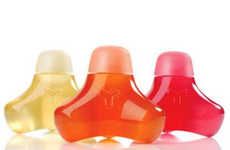
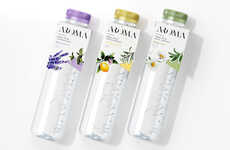
In cooperation with ScentSational Technologies and Firmenich the first commercial application of CompelAroma, the Encapsulated Aroma Release technology, a replication of the transmission of flavour of the sherry oaks in the whisky industry, came to the market. The flavours mix with the water by opening the bottle, giving the consumer the experience of lemon, peach or berries, without the calories, sweeteners or preservatives.
Nanotechnology
Besides the encapsulation of flavours enzymes can be encapsulated to improve, preserve or accentuate the flavour and so the taste, with which we enter the nanotechnology. Although this technology is far from home in terms of real industrial applications, it is worthwhile to mention one of the most famous experiments in this field.
It is well-known that citrus fruit tastes bitter. The bitterness of grapefruit is due to a common plant compound that has sugar molecules attached to it. By impregnating the polymer inner layer of the packaging with certain enzymes the sugar molecules are separated, effectively making the juice taste sweeter.
Beverages such as chilled coffee, fruit juices and ready-to-eat meals can have that fresh brewed, fresh squeezed or fresh made taste profile out of a pack which previously has been unattainable.
What people think they taste is solely the result of inhaling odours. The tongue recognises only the five basic taste varieties. All other tastes are the result of odours. Odours enter, to put it simply, the nostril to the nasal cavity, where they are detected by the olfactory receptors and after that translated by the brain into tastes. The person gets the perception that the aroma he smells will be the taste he is ready to experience.
That's why a seducing aroma tells a consumer he wants the product. If consumers are let the choice, 80% will choose the product he can see as well as smell. With 70% of the purchase decisions made in the supermarket aisles it is time for the consumer product manufacturers to incorporate the olfactory sense with the visual and tactile ones.
The olfactory packaging refers to the packaging which activates the sense of smell. Stirring these emotional senses might have as goal seducing the consumer to buy, but on the other hand in a pre-programmed form initiate a quality and/or aroma improvement leading to a better taste of the product to be consumed.
Smelling systems
The cosmetic and personal care industries certainly have mainly interest in seducing the consumer. At this moment roughly three systems are known, which give a fragrance to the packaging.
With exception of the scratch-and-sniff labels, where some activity of the consumer is required and some modesty the rule, all other technologies are based upon free-flowing encapsulated aromas or fragrances, to stimulate the consumer to make the purchase decision.
Never ever will there be a supermarket owner allowing his shop to be stacked with ´smelling´ packages for his customers to meet a wave of cosmetic odours by entering, overwhelming the delicious aromas of freshly baked bread or freshly brewed coffee.
Consequently the cosmetic industry has to restrict itself to the scratch-and-sniff labels or employ more advanced and sophisticated technologies.
Think in terms of a scanner, a mobile telephone, the barcode or the RFID-tag. An integration of these items can allow potential buyers to ´consume´ freely the aphrodisiacal fragrances without opening the package or rubbing the scratch-and-sniff label.
Scanning aromas
Heinz Japan is able by using the barcode, scanned by the mobile of the consumer to send recipes to the home computer of the consumer. Aroma Water is developing a system where an extra film layer atop the RFID-tag and the scanner of the mobile, will instruct the packaging to release aromas. Both systems depend on the availability of the correct mobile in the hands of the consumer, but adjusted might lead to the ScentDome.
TriSenx developed the ScentDome, as addition to the periphery of the home computer, with the intention to release fragrances online for communication of aromas through the internet. The ScentDome, made from DuraStar polymer stores aromas. The aromas can be released in any combination, creating thousands of fragrance variations by a simple electronic pulse. Aromatic e-mails contain electronic signals, which, when decoded, activate the ScentDome which releases the desired fragrance. The idea was, that people could simply e-mail their loved-ones the smell of freshly cut roses and chocolates with Valentine's Day.
Following up this idea, it might be the answer for the cosmetic industry to let fragrances release on command, without frustrating the ambiance of the supermarket.
Encapsulating Food Aromas
Although the above mentioned technologies can also find their way in food engineering, there is quite a different and more interesting application of odour encapsulation for the food and beverage packages, i.e. the preservation and quality improvement of taste.
As shelf-live is pursued as long as possible with the restriction to maintain the original taste during the full life-cycle of the product, complicated material compositions with the necessary barriers are used to protect a compound product against degradation.
But whatever is done, the fact remains that plastics infringe on the quality of the taste. And boldly spoken the retorting process destroys the fine taste profile.
In cooperation with ScentSational Technologies and Firmenich the first commercial application of CompelAroma, the Encapsulated Aroma Release technology, a replication of the transmission of flavour of the sherry oaks in the whisky industry, came to the market. The flavours mix with the water by opening the bottle, giving the consumer the experience of lemon, peach or berries, without the calories, sweeteners or preservatives.
Nanotechnology
Besides the encapsulation of flavours enzymes can be encapsulated to improve, preserve or accentuate the flavour and so the taste, with which we enter the nanotechnology. Although this technology is far from home in terms of real industrial applications, it is worthwhile to mention one of the most famous experiments in this field.
It is well-known that citrus fruit tastes bitter. The bitterness of grapefruit is due to a common plant compound that has sugar molecules attached to it. By impregnating the polymer inner layer of the packaging with certain enzymes the sugar molecules are separated, effectively making the juice taste sweeter.
Beverages such as chilled coffee, fruit juices and ready-to-eat meals can have that fresh brewed, fresh squeezed or fresh made taste profile out of a pack which previously has been unattainable.
Trend Themes
1. Olfactory Packaging - Businesses can improve their products' taste and attract more customers through the use of olfactory packaging that activates consumers' sense of smell.
2. Scanning Aromas - Technologies such as mobile scanning apps and RFID tags have the potential to allow consumers to experience fragrances without opening the packaging, creating new opportunities for the olfactory marketing industry.
3. Encapsulating Food Aromas - Encapsulated aroma release technology can be used in the food and beverage industry to preserve and improve product taste, potentially leading to a disruptive effect in the industry and increasing customer satisfaction.
Industry Implications
1. Cosmetic Industry - The cosmetic industry can benefit from olfactory packaging by employing advanced technologies such as scanners and mobile apps to offer aphrodisiacal fragrances.
2. Food and Beverage Industry - The food and beverage industry can improve product quality and preserve taste by using encapsulated aroma release technology, which may lead to a disruptive change in the industry through increased customer satisfaction.
3. Nanotechnology Industry - The nanotechnology industry can play a role in improving the taste of packaged food and beverage products by developing new technologies, such as enzymatic encapsulation, that can separate citrus plant bitterness and create a sweet taste in juices.
2.4
Score
Popularity
Activity
Freshness