
$100 Million Sailboat - The Maltese Falcon

Login  |  Join Now (FREE)!
Trend Spotting, Cool Hunting, and Innovation Trends
     Daily Issue (40+/Day)   |  Tech  |  Fashion  |  Pop Culture  |  Sex  |  Business  |  Eco  |  Art & Design  |  Bizarre
   

CAN YOU GUESS WHAT'S NEXT?

Next Trend

Jeremy Gutsche
On: Jul 17, 06
1395 Trends
612 Comments


$100 Million Sailboat - The Maltese Falcon [Edit]


$100 Million Sailboat - The Maltese Falcon Click for Larger Image

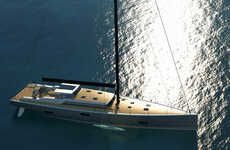
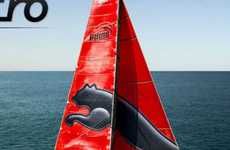
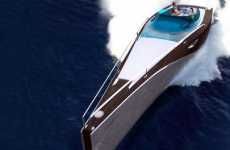
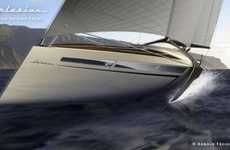
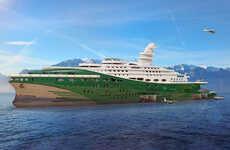
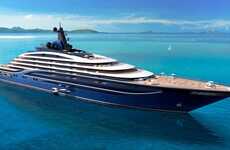
If you want the fastest personal sailboat in the world, you might want the Maltese Falcon.  It cruises along the ocean with 57 meter tall masts and a pretty much commands authority.  However, at $100 million, it isn’t meant for everyone.

Here’s the Press Release:

Insensys Celebrates Successful Completion of the Maltese Falcon Project - July 2006

As the world’s most technologically advanced, privately owned superyacht is officially presented to the world in Italy on Friday 14th July, reports from sea trials already show she is destined to become the largest and fastest personal sailing boat in the world. She also represents the successful completion of a multi million pound engineering and design project by Insensys, a company leading the world with its innovative expertise in fibre optics sensing and composite technology.

The Maltese Falcon is an 87.5 m length superyacht, has origins closer to traditional Clipper design with long slender hull and three masted square rig, than modern cruising yachts. But it is about here that the similarities with the Clippers from the golden age of sail end. At the request of the owner - American Silicon Valley pioneer, venture capitalist, financier and sailing enthusiast - Tom Perkins, the Maltese Falcon has the world’s most innovative and technically advanced free standing rig system in the world, which was designed, developed and manufactured by Insensys.

Using the composite design and sector technology for which Insensys is already well known in the wind turbine, oil and gas sectors, the company set about managing the entire development, design, testing and manufacture of the world’s largest and most technically advanced rig, for a vessel which, estimates state, will cost in the region of $100m.

The Maltese Falcon was built by Italian superyacht specialist Perini Navi, a company which has a reputation for its insight and understanding of electrical systems. This, combined with owner Tom Perkins’ personal enthusiasm for technical innovation and a desire for cost effective manufacturing, resulted in a combination of the world’s leading experts working from a shipyard in Turkey. As well as providing the space required, the cost effective work force was a key factor in choosing this location, as the estimated build time was put at around 1 million man hours.

Insensys’ VP Engineering Damon Roberts took a team of Hamble-based engineers to Turkey to set up the mast manufacturing facility. He added around 30 locally based workers, resulting in a workforce which could handle every aspect of the project from the design, manufacture, as well as the crucial job of stepping the masts using two 500 ton cranes.

Maltese Falcon has three free standing masts – each one 57 metres high and weighing 26 tons. Each mast has six curved carbon fibre yards – making the rig look like those found on conventional square riggers. Each mast carries five individual sails that can be set separately. Uniquely, however when all are set, they combine to create a single continuous sail.. Because the masts are free standing, they can be rotated to suit the wind direction. To maximise speed, the sails are trimmed to the wind by rotating the mast – thus making the boat much more aerodynamically efficient.

The basis for the design of the masts and rig system for this three masted rig and spars is not new. It was first created in the 1960’s by German hydraulics engineer Wilhelm Prolls, who believed that the system would provide improved aerodynamic performance and that hydraulic motors could be used to set and recover sails, and keep the mast, yards and sails automatically aligned to the wind. The concept was called the DynaRig. Although briefly considered as a reasonable concept during the oil crisis, where it was envisaged that tankers could employ this system, it was not adopted by the world’s shipbuilders. A flaw in Prolls’ system was that the masts would have to be stayed – use lines to keep the mast upright – and that could now be overcome as high strength composites would enable free standing masts to be built.

That development, combined with the leading edge fibre optic sensing and composite technology available from Insensys, persuaded Perkins and Perini Navi that this development of the innovative rig system would work.

Using Insensys’ proprietary and world leading unique Time Domain Multiplexing (TDM) sensing techniques embedded in the composite, the crew on board are provided with reliable, consistent and easy to understand data which shows the exact forces being experienced by the mast, as well as the structural stresses and strains, which are reported straight to the navigational control area on the bridge. An illustrated control panel shows the speed and wind forces on the masts, and displays graphically the stress and strain to ensure the masts are not overpowered to breaking point. Uniquely, this load information also provides driving and drag forces for each mast enabling the crew to optimise the sails for maximum efficiency on any point of sailing. From this point of view the crew have as much information available as a windtunnel would provide.

Martin Jones, Chief Executive of Insensys explained that the project relied on the company’s expertise in extreme structural engineering. “The project dealt with unknowns – the masts would be subject to bending loads of around 18,000,000NM, which is around three times that experienced by the biggest wind turbine ever built. However, by using sound and sensible testing and development methods, the development of scale models including full scale sections, and the Insensys embedded Fibre Optic Strain measurement technology, we were able to validate the design and use of finite element analysis software before starting manufacture of the full scale rigs.”

Insensys started with a 40th scale model of the rig, before developing a sixth scale model with a 4 metre high mast which was used in wind tunnel testing. “By looking at the data provided by the embedded sensors, we could then stress the rig to destruction to obtain a real insight into the performance of both the design tools and the build process.

“Having installed the Fibre Optic sensors throughout the rig and providing data to the crew, we are further able to validate our design and build processes and as importantly the crew have real time feedback on the precise rig loads as they drive the yacht to its maximum” continued Jones.

Managing the whole project also required Insensys to take control of all other aspects of the rig. “We managed every part on the rig, as the only safe way to ensure the parts were completely to the specification we required,” explained Roberts. This meant Insensys even got as intricately involved as specifying the exact shape and size of the ropes used to furl the sails into the masts, as well as requiring a number of specially designed and manufactured pieces of mast and deck hardware. This level of involvement also went as far as Roberts supervising the mast stepping, which required two 500 ton cranes, operated by Insensys staff. “The dimensions of the mast are around that of a football pitch, so getting the exact lift and tilt was essential,” said Roberts. “It was one a challenging lift, and there was just a 4mm clearance between the mast and the deck.”

The Maltese Falcon undertook sea trials during June, which were announced to be a success. Owner Tom Perkins wrote: “The boat’s performance satisfied our highest hopes and expectations. The Maltese Falcon has written a new page in the history of yachting, as the DynaRig is no longer an experimental concept - we had a day of stunning success!

“Everything worked as engineered, and Falcon achieved some remarkable numbers. Hard on the wind in 15.8 knots true, at 38 degrees relative wind angle, we sailed with no fuss or strain at 10.5 knots. On a close reach at 60 degrees relative angle, the speed (still at knots 16 true wind) climbed to 14 knots.

The balance was essentially perfect, with weather helm never exceeding 0.6 degrees on the wind, or 2.5 degrees on a fast reach. The angle of heel was around 15 degrees, but in a puff, once touched 20 degrees. The leeway angle was well under 5 degrees without the daggerboard in place. It was our first day out, and we wanted to be careful, so these results were achieved with the topgallants and the royals furled. So we expect even better numbers in further tests. The maximum loading on the masts never much exceeded 50% of our very, very, conservative limit, so, we have plenty of room for some even better results.”

The Maltese Falcon is officially launched on July 14th, and Roberts and his team will be among the guests invited. For Insensys the project has provided a great opportunity to demonstrate the complete integration of its Fibre Optic Strain measurement technology from design and testing through to operational feedback and control. As this project closes, the Maltese Falcon team are already becoming fully engaged in the increasing applications for the Insensys technology within the Oil and Gas sector and the Wind Energy industry which are Insensys’ main markets.

For more information please email info@insensys.com


Read More: insensys   Via: luxist  


Bookmark
Embed This Trend
Send to a Friend
RSS Feed


Add this to Your
Trend Portfolio
Collect Favorites, Add Comments,
Submit Trends and Earn Money
Trends


Comments:


2 Bad we cant reproduce design modified for cruise liner. Nice. Oops we do have Windstar lines. But Imagine sailing on this. Wow. TransPac, or TransMedSea. Love tech reuses. Can TH get onboard for sailing??? Crowd draw alone coming into NYC Harbor, Miami FL, Newport RI, Maine, Maui HI. SF CA.

By: rocketranger on Mar 9, 07 | 0 Trends | 2128 Comments

Looks like the Hillister logo.

By: shat on May 8, 07 | 0 Trends | 561 Comments


Latest Trends Newsletter
trend newsletter
Trends RSS Feed

Trend Hunter Toolbar

Latest Trends RSS TREND HUNTER is the world's largest trend spotting and cool hunting community. It is an explosion of cool, fueled by a global network of trend spotters and cool hunters. Innovation and strategic advantage hinge on the ability to anticipate the latest trends and identify the next big thing, like this post about, "100 million sailboat the maltese falcon." By tracking the evolution of cool, Trend Hunters generate ideas, stimulate creativity, and ultimately unlock cool.

About Us | Trends | Trend Reports | RSS (98 Flavors) | Innovation Keynotes | Tips / Contact | Join
0.5050
Trends and Content Copyright © TREND HUNTER Inc. All Rights Reserved.