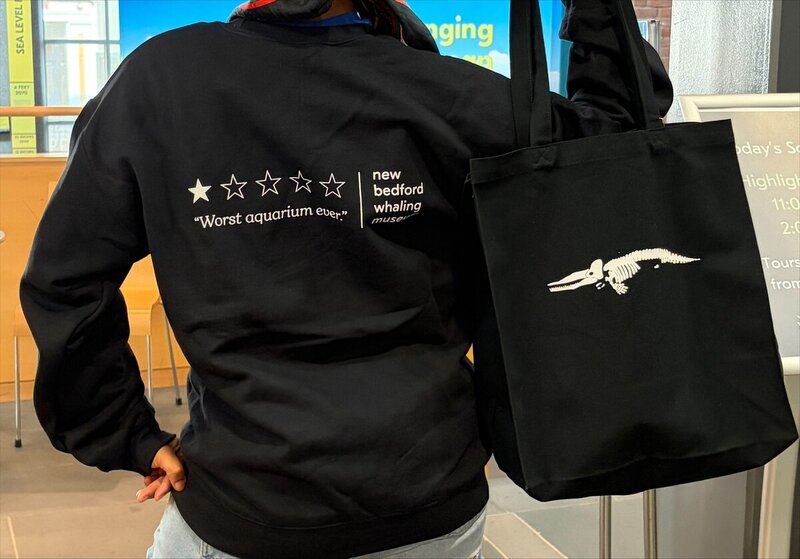
The New Bedford Whaling Museum in Massachusetts, considered the home of whaling's history in America, turned an unfavorable review into a full-on Worst Aquarium Ever merch line. At the destination, visitors can expect to learn about maritime history and whale science through large-scale artifacts, art collections and interactive exhibits—but there's no live marine life on-site, which was the main concern of the complaint posted on Google Reviews. With t-shirts, hoodies, totes and other items depicting a whale skeleton, the museum is humorously leaning into its non-aquarium status.
As the museum proves, negative reviews provide an opportunity to speak directly to the values that matter most to an ideal customer. In turning a critical one-star review into merch, the New Bedford Whaling Museum reinforced its story, reaffirmed what it stands for, and created a product line that consistently sells out.
What Makes This Trend Stand Out
- Criticism-led Merchandising
- Brands are transforming public complaints into self-aware product lines that convert reputational risk into cultural relevance and new revenue.
- Anti-expectation Branding
- Humorous acknowledgment of what an experience is not can sharpen positioning and attract audiences seeking authenticity over conventional marketing polish.
- Review-driven Storytelling
- Customer feedback is becoming a creative source for campaigns that clarify brand identity while deepening emotional connection with niche communities.
Sectors Adopting This
- Museum Retail
- Gift shops are evolving beyond souvenirs into agile brand platforms that turn institutional narratives into collectible, conversation-starting merchandise.
- Cultural Tourism
- Destinations can use playful transparency to differentiate visitor experiences and appeal to travelers drawn to distinctive, story-rich attractions.
- Experiential Marketing
- Campaigns rooted in real audience reactions offer businesses a way to build participation, humor and shareability into brand engagement.