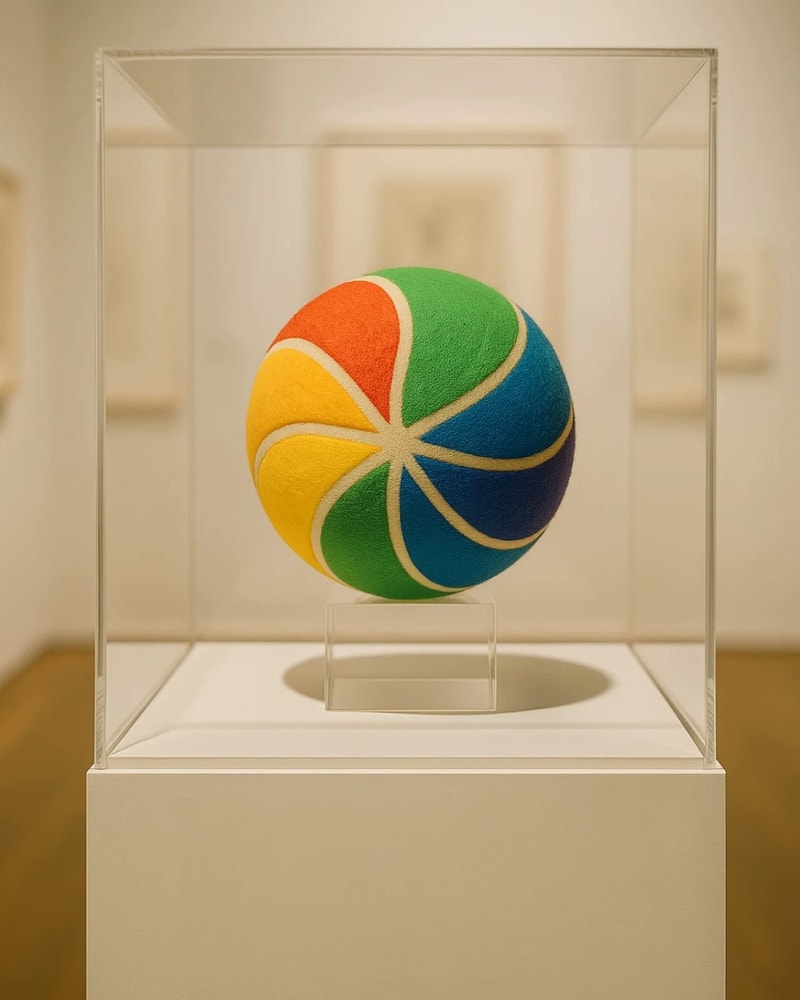
Designer David Delahunty, who is better recognized as the Instagram handle designershumor has created the Wilson and Apple tennis ball. The spinning colorful wheel that is seen on Apple devices looks like a rainbow-colored beach ball that replaces where the cursor usually is. The collaboration is unofficial and generated by AI technology.
Usually, tennis balls are either in deep red or neon green but this one is designed with 8 swatches of six colors. The ball has a fuzzy texture -- it is entirely developed by AI, which continues with the branding as well. It is seen enclosed partially in a white box with branding nodding to both brands and David followed by 'limited edition.'
Image Credit: David Delahunty
Key Themes Behind This Trend
- AI-driven Design Collaborations
- The use of AI to merge design elements from iconic brands like Wilson and Apple highlights opportunities for creative collaborations that transcend traditional brand boundaries.
- Digital-inspired Physical Products
- Transforming digital icons into tangible items, such as a tennis ball styled after Apple's spinning wheel, opens up new possibilities for novelty products that resonate with tech-savvy consumers.
- Limited Edition Drops
- The concept of releasing limited edition items infused with cultural or technological motifs suggests a lucrative opportunity for brands to create buzz and drive demand through exclusivity.
Where This Applies
- Sports Merchandise
- Innovative designs like a digitally-inspired tennis ball can inject fresh interest and attract diverse consumer segments into the sports merchandise market.
- Consumer Electronics
- By collaborating with brands across different sectors, consumer electronics companies can enhance brand value and explore cross-promotional marketing strategies.
- Fashion and Apparel
- The integration of unexpected visual elements from popular technology into fashion items presents a chance for disruption within the fashion and apparel sector, enticing a broader audience.