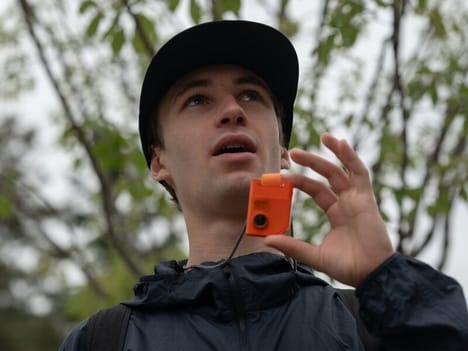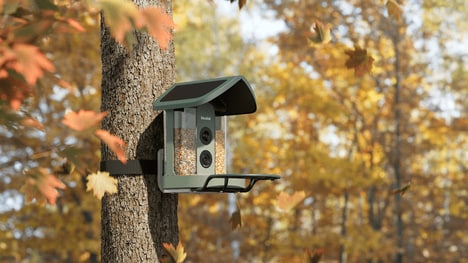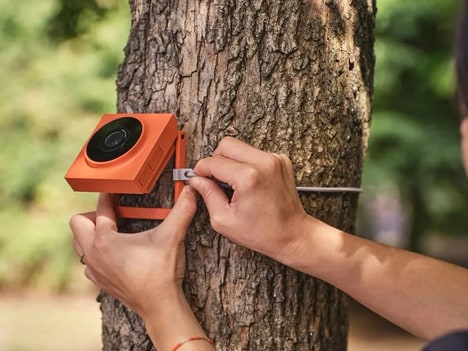
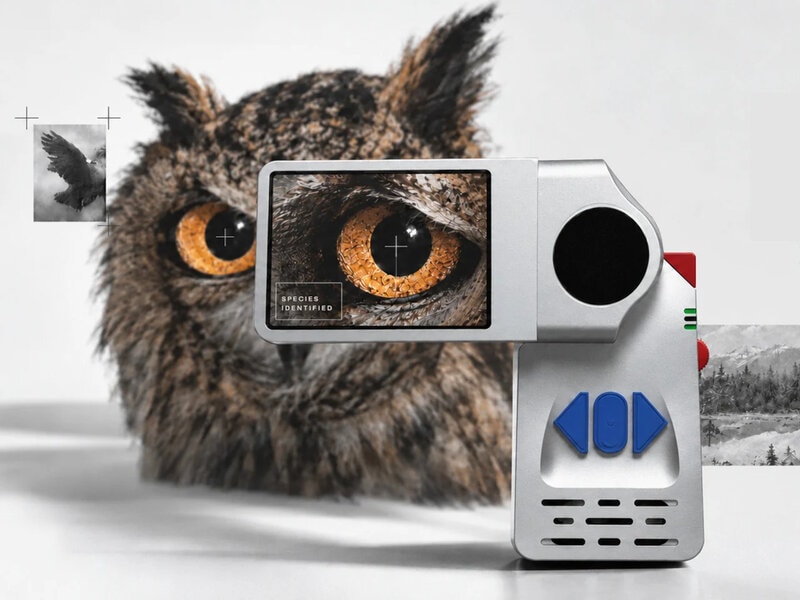
Maanit Singh's log concept is a handheld for trailside walkers that combines a camera, AI species recognition, and a personal field journal in one folding device. Its screen swings out into an L-shaped form, separating the grip from the display so a user can photograph a bird or flower and store the match in a dedicated record.
When shut, log stays a slim rectangle with a round joint at one end; when open, blue directional buttons and red side accents bring button-led control back into the interaction. A 2.8-inch screen and 4,000mAh battery outline a compact build meant to stay useful on longer walks.
The folding screen and built-in field log turn species lookup into a single-purpose ritual instead of another phone task with unrelated alerts. A dedicated record of sightings widens the case for niche outdoor electronics by giving walkers a reason to carry something built around observation.
Image Credit: Yanko Design, Maanit Singh
Why This Trend Is Growing
- AI Nature Identification
- Embedded recognition tools transform casual wildlife encounters into instant learning moments, opening space for specialized devices that reduce reliance on multipurpose smartphones.
- Dedicated Outdoor Journaling
- Single-purpose digital logs create richer personal records of hikes, birding, and plant spotting, suggesting new value in focused hardware for nature-based hobbies.
- Foldable Field Devices
- Compact folding screens support more ergonomic observation and recording behaviors, signaling opportunities for rugged niche electronics designed around specific outdoor rituals.
Industries Being Reshaped
- Consumer Electronics
- Purpose-built handhelds blend cameras, AI, and compact displays into differentiated products for users seeking distraction-free alternatives to mobile apps.
- Outdoor Recreation
- Nature walkers and trail users gain more structured ways to document discoveries, expanding the market for gear that combines exploration, education, and memory keeping.
- Edtech
- Portable species recognition and field journaling can extend environmental learning beyond classrooms, creating new formats for experiential science education.