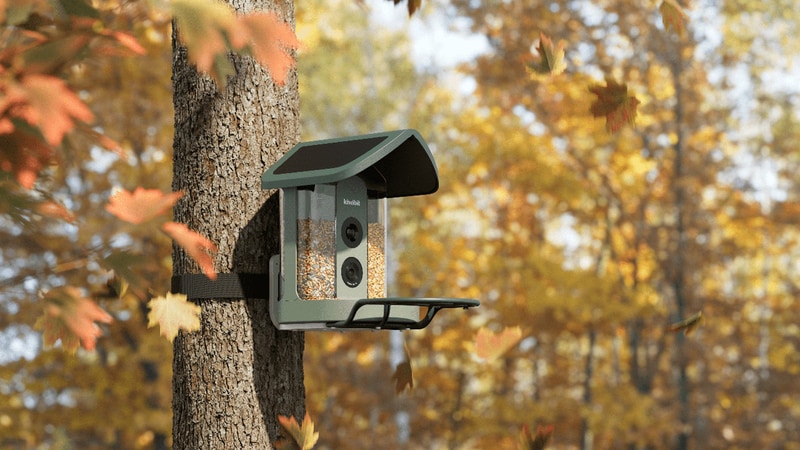
Kiwibit has introduced the Bird Feeder 2, a connected bird feeder designed to support wildlife observation through integrated camera technology and automated monitoring features. Shaped like a compact gable-roof structure, the feeder incorporates dual food containers with a combined 1.5-liter capacity and a built-in 4K camera capable of recording wildlife activity throughout the day.
A 132-degree field of view, night vision capabilities, and Wi-Fi connectivity allow users to observe visiting birds remotely, while onboard AI technology can identify up to 10,000 species. Integrated solar panels help power the system and support continuous operation in outdoor environments.
The feeder is constructed from durable plastic and carries an IP65 waterproof rating for year-round use. It is designed to withstand temperatures ranging from -4 to 122 degrees Fahrenheit and can be mounted to poles, walls, or trees. Users can monitor activity, listen to surrounding sounds, and manage feeding through the connected system.
Image Credit: Kiwibit
Why This Trend Is Growing
- AI-powered Wildlife Monitoring
- A proliferation of onboard AI that can identify thousands of species creates new possibilities for automated biodiversity data collection at scale.
- Solar-powered Remote Devices
- Integrated solar energy and low-power design support continuous, off-grid operation of outdoor monitoring systems in varied climates.
- Connected Consumer Wildlife Experiences
- Remote streaming, ambient audio capture, and app-based controls shift bird watching toward social, shareable, and subscription-friendly experiences.
Industries Being Reshaped
- Consumer Electronics
- Durable, weatherproof smart feeders merge camera, AI, and connectivity requirements that drive demand for ruggedized, low-power consumer devices.
- Conservation Technology
- High-resolution imagery and automated species recognition can augment longitudinal ecological studies and citizen science datasets.
- Smart Home and Iot
- Integration of outdoor wildlife sensors with home networks and voice assistants expands the scope of ambient intelligence into exterior spaces.