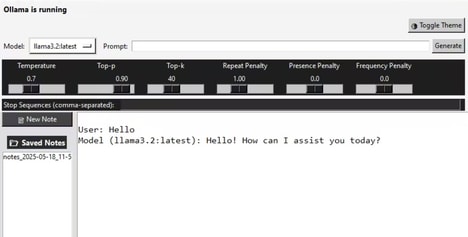
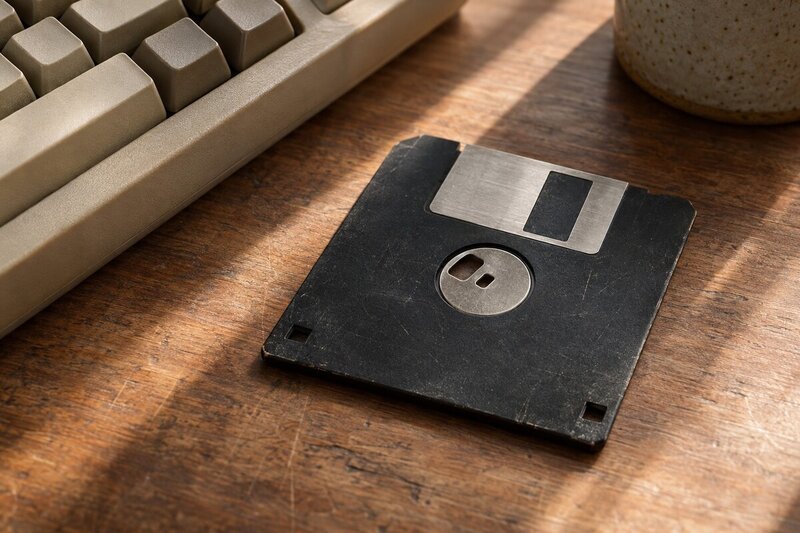
WollyMonjac created 'Tiny 2.1', a Claude-written chatbot for DOS machines that fits on a 1.44 MB floppy. It targets 486DX and Pentium-class PCs, offering retro-computing users a small local question-and-answer bot instead of a modern large language model.
Tiny 2.1 answers from a limited fact set, so it works best on the words, math, and short prompts it was trained on. Its 367,000-parameter network keeps the package small enough for old hardware, and the bright DOS interface adds a chat log, a live model display, and PC-speaker voice output. The ZIP file and MIT-licensed training scripts are available on GitHub for emulator use or recompiling.
WollyMonjac shows how a 367,000-parameter network can bring a small local chatbot to vintage DOS hardware, with a ZIP file and MIT-licensed scripts on GitHub.
Image Credit: AI-generated
What's Driving This Trend
- Ultra-lightweight AI
- Tiny neural networks designed for constrained hardware create space for specialized assistants that run locally without cloud infrastructure or modern processors.
- Retro-computing Revival
- Renewed interest in legacy machines is expanding beyond nostalgia into practical software experiments that make old platforms feel newly interactive.
- Offline Micro-assistants
- Small, task-specific chatbots with limited knowledge sets highlight new possibilities for private, low-cost question-and-answer tools in bandwidth-limited environments.
Who This Affects Most
- Vintage Computing
- Legacy hardware communities are becoming testbeds for minimalist AI applications that extend the usefulness and cultural value of obsolete devices.
- Open-source Software
- Publicly released training scripts and permissive licensing support collaborative refinement of compact models for niche platforms and experimental use cases.
- Edge Computing
- Resource-constrained local intelligence demonstrates how AI can shift toward efficient, device-level processing for specialized tasks and low-power systems.