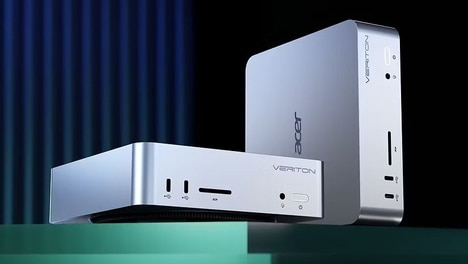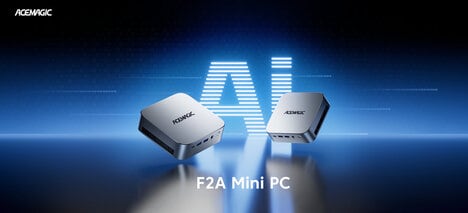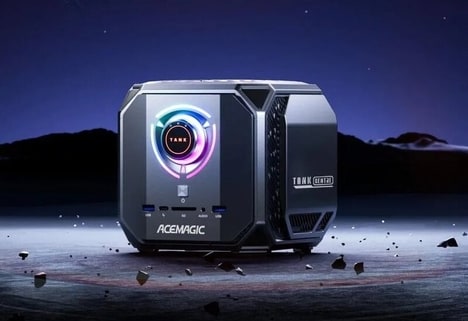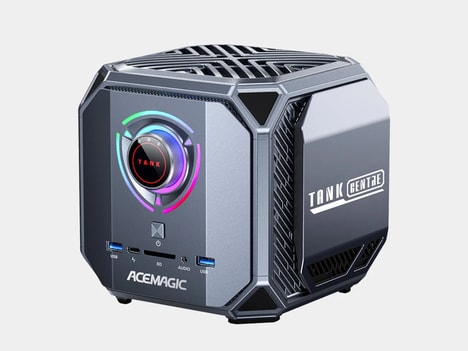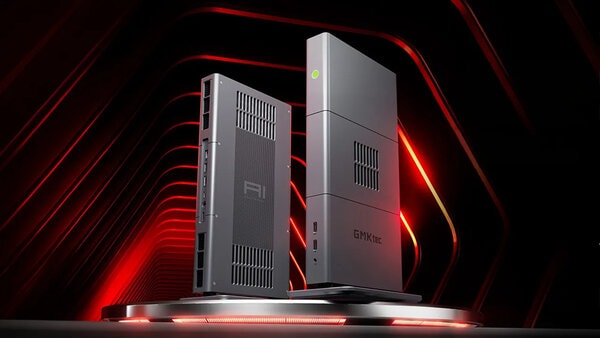
ACEMAGIC built the Retro X5 mini PC to put up to 73 TOPS of on-device AI processing into a small desktop with a throwback shell. A Ryzen AI processor and Radeon graphics give people who want a compact computer enough headroom for local AI tasks and everyday desktop work without moving to a larger tower.
Support for four 8K monitors lets the system anchor a spread-out workspace instead of just a single-screen setup. The removable top cover keeps upgrades approachable, so owners can expand the machine without treating a mini PC like a sealed appliance.
Up to 73 TOPS in a retro-styled enclosure turns AI performance into part of the mini-PC pitch rather than a niche add-on. It makes nostalgia and local AI compute a single value proposition, fitting a category that often competes on size alone.
Image Credit: ACEMAGIC
What Makes This Trend Stand Out
- Retro AI Hardware
- Nostalgic product design paired with high-performance local compute creates room for emotionally resonant devices that still meet modern AI productivity demands.
- Compact Workstation Computing
- Small-form-factor desktops with multi-display support are reshaping expectations for professional setups that previously required larger tower systems.
- Upgradeable Mini Pcs
- Accessible internal expansion in compact computers challenges the sealed-device model and supports longer product lifecycles for power users.
Sectors Adopting This
- Personal Computing
- AI-capable mini desktops create new differentiation in a mature hardware market by blending size efficiency, performance, and design identity.
- Consumer Electronics
- Retro-inspired smart devices point to demand for products that combine visual familiarity with advanced processing capabilities.
- Workplace Technology
- Multi-monitor AI-ready desktops support distributed digital workflows where compact hardware can anchor increasingly complex productivity environments.