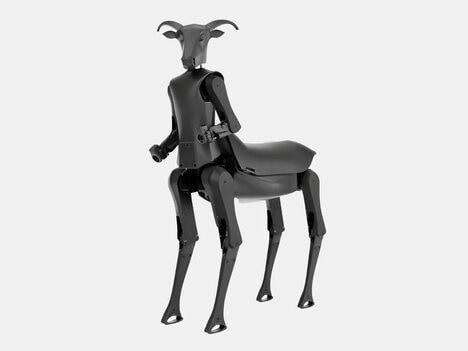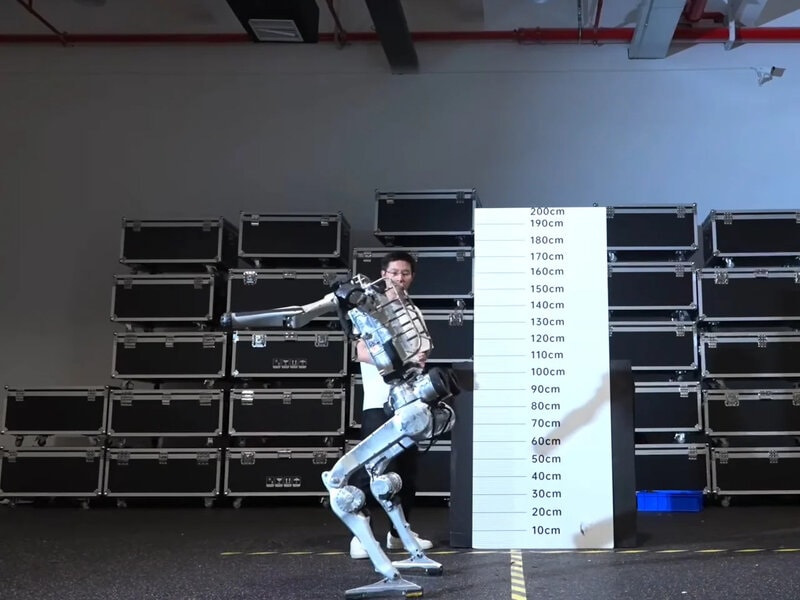
Unitree Superman is a humanoid robot developed to showcase advanced athletic performance through high-speed running and vertical jumping demonstrations. Revealed on August 17, the prototype completed a standing high jump of 2 meters and reached a top speed of 12.66 meters per second during testing. The robot features 0.85-meter-long legs engineered to support dynamic movement, with Unitree describing the platform as an ongoing development that will receive additional performance improvements in future iterations.
The demonstration follows Unitree's public listing on the Shanghai Stock Exchange and expands the company's portfolio of robotics platforms, which includes quadruped, service and humanoid robots. The recorded running speed exceeds the peak velocity achieved during Usain Bolt's world-record 100-meter sprint, highlighting the system's focus on mobility research rather than commercial deployment. Unitree says the Superman platform remains under active development.
Image Credit: Unitree
Key Themes Behind This Trend
- Athletic Humanoids
- Record-setting robotic speed and jumping capabilities signal new possibilities for mobility platforms that can outperform human benchmarks in testing environments.
- Dynamic Legged Robotics
- Advanced leg design and motion control are expanding the performance envelope for robots built to navigate complex, high-speed, and uneven physical spaces.
- Robotic Performance Showcases
- Public demonstrations of extreme robotic abilities are becoming strategic signals of technical leadership, investor momentum, and future commercialization potential.
Where This Applies
- Robotics
- Humanoid and quadruped platform development is creating competitive space for machines designed around agility, endurance, and adaptable movement.
- Sports Technology
- Athletic robots introduce new benchmarks for biomechanical analysis, training simulation, and performance measurement beyond human physical limits.
- Industrial Automation
- High-mobility robotic systems point to future automation models capable of operating in less structured environments than traditional factory equipment.