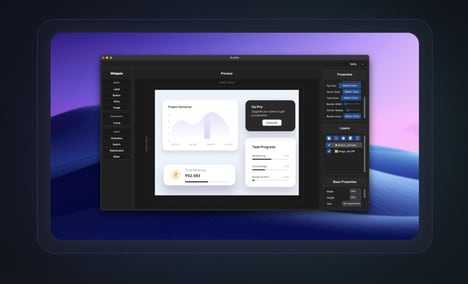
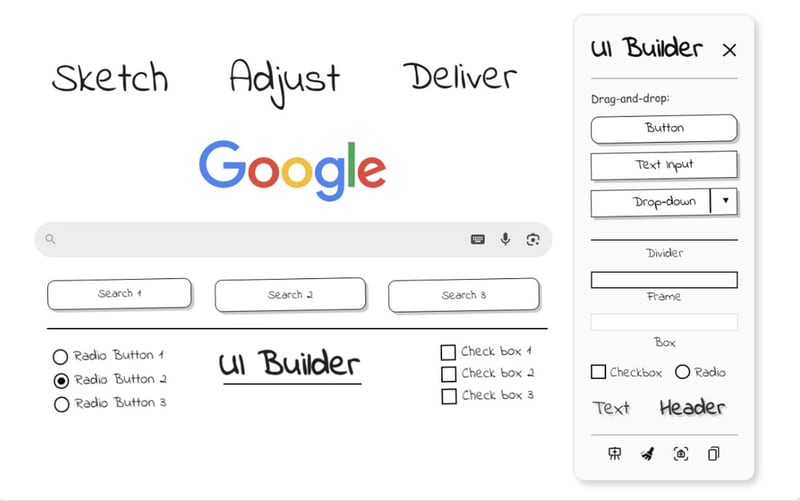
UI Builder is a browser-based design tool that enables users to create wireframes directly on live websites or within a blank canvas environment. Delivered as a Chrome extension, it allows users to drag and place interface elements such as buttons, inputs, and headers, then edit, resize, and annotate them in real time.
This approach supports rapid prototyping without requiring dedicated design software or switching between tools. By enabling on-page mockups, it facilitates immediate visual feedback during client presentations, team discussions, or usability testing. Tools like UI Builder reflect a broader shift toward lightweight, in-context design solutions that prioritize speed and collaboration. For businesses and product teams, such capabilities can streamline early-stage design workflows, improve communication between stakeholders, and accelerate iteration cycles in web and product development processes.
Image Credit: UI Builder
Key Themes Behind This Trend
- In-context Prototyping
- On-page mockups that overlay live websites enable immediate fidelity testing and reduce the gap between conceptual designs and real-world behavior, creating new pathways for iterative validation.
- Browser-based Design Tools
- Design capabilities embedded in the browser consolidate workflows previously split across desktop apps and developer environments, opening possibilities for lighter, more accessible tooling ecosystems.
- Real-time Collaborative Wireframing
- Simultaneous editing and annotation during presentations or testing sessions foster synchronous stakeholder alignment, transforming how cross-functional teams converge on early-stage UI decisions.
Where This Applies
- Web Development
- Front-end build processes and QA cycles could be streamlined as live-wireframe tools surface layout issues and interaction mismatches earlier in the development lifecycle.
- UX Design Agencies
- Client-facing workshops and iterative contracts may shift toward on-site, tangible proofs that alter pricing and delivery models by emphasizing rapid, in-browser validation.
- Saas Product Teams
- Product roadmaps and MVP strategies stand to be reshaped by quicker prototype-to-test loops that prioritize measured usability outcomes over extended internal design sprints.