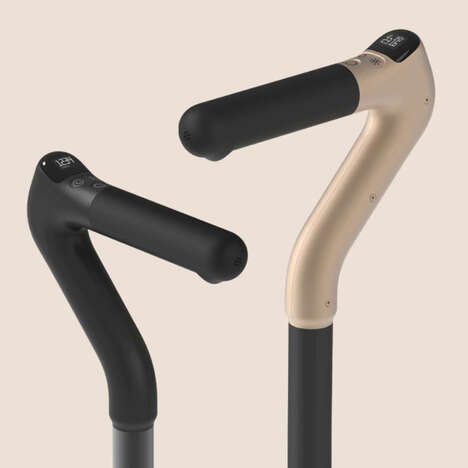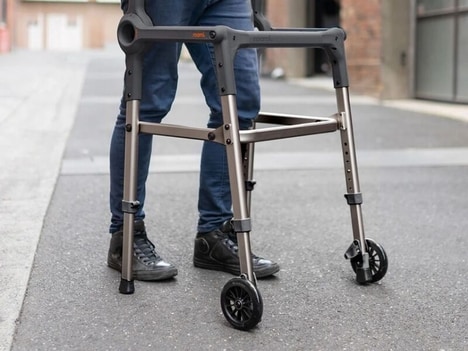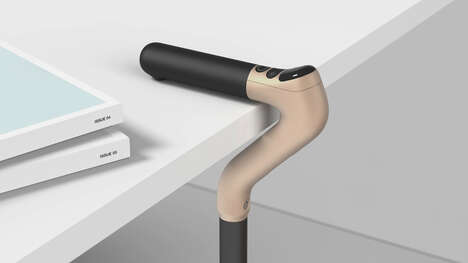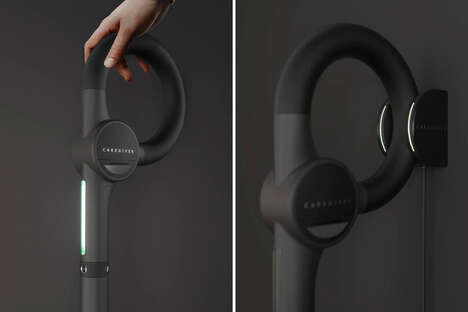

Walking Sticks are meant to help the elderly and disabled get around easier, but when not in use they are often prone to falling over, which is a nuisance to those with limited mobility; enter the Tricane by Ryan Kirkpatrick, an industrial designer based in Sydney, Australia. It has a clever and convenient function that allows it to stand on its own when it is not needed.
The Tricane by Ryan Kirkpatrick achieves this freestanding capability through the use of a tripod attachment that is manually triggered to open. Made out of anodized aluminium, this function doesn't take away from its overall lightweight, compact and good-looking design, which happens to resemble a classic cane. Although there is no word on whether it will be produced, such a good concept shouldn't go to waste.
Why This Trend Is Growing
- Freestanding Mobility Devices
- Opportunity for designers and engineers to create mobility assistance devices with freestanding capabilities to improve convenience for elderly and disabled individuals.
- Innovative Attachments
- Development of industrial attachments for mobility devices could help create convenient features for elderly and disabled individuals.
- Lightweight Industrial Design
- Advancements in materials used for mobility devices could result in lighter and more aesthetically pleasing designs without sacrificing functionality.
Industries Being Reshaped
- Healthcare
- The healthcare industry can benefit from innovative mobility devices that improve the quality of life for elderly and disabled individuals.
- Assistive Technology
- The market for assistive technology could expand with the introduction of freestanding mobility devices that assist with daily living activities.
- Industrial Design
- Industrial designers have the opportunity to create more aesthetically pleasing mobility devices that incorporate innovative features for convenience.