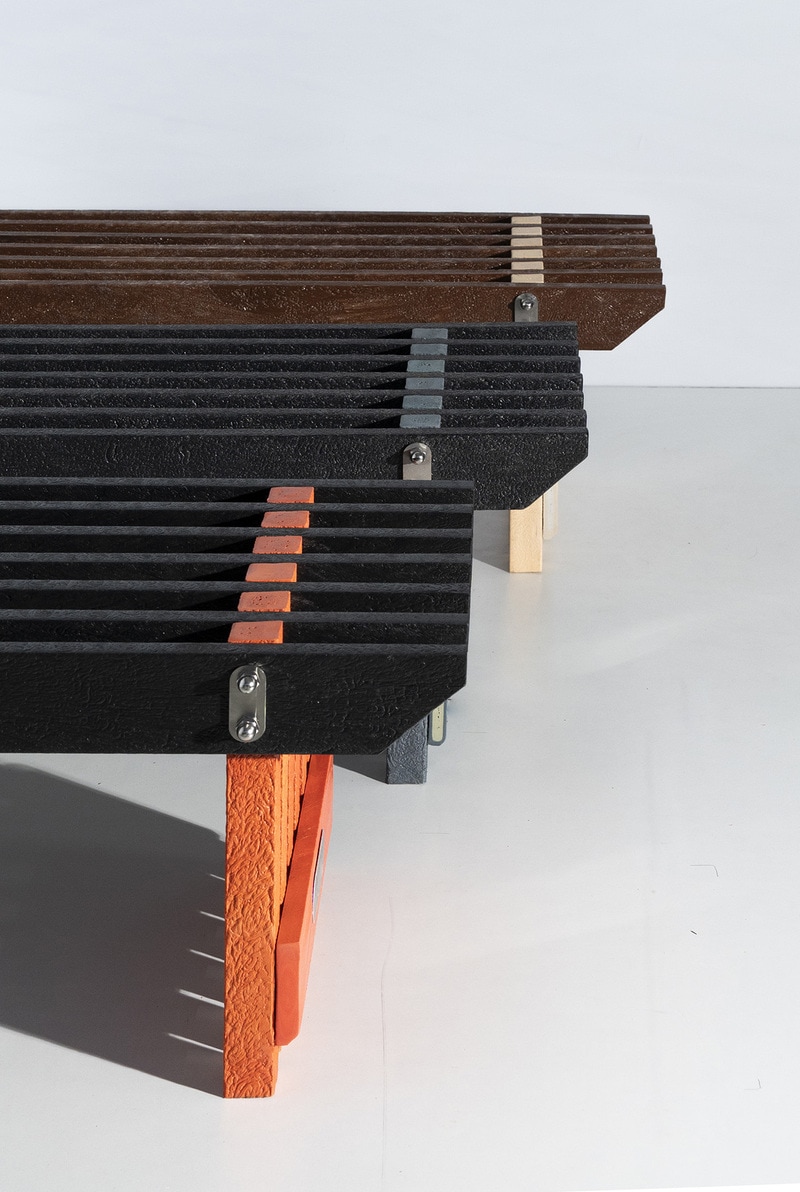
The Torii Bench by Placyle unites recycled materials with architectural simplicity, taking inspiration from Japan’s torii gates and the natural rhythm of sunlight. Crafted entirely from post-consumer and industrial plastic waste, the bench offers UV stability, weather resistance, and a speckled surface that highlights the beauty of reuse. Its clean lines and balanced proportions evoke both structural integrity and calm presence, reflecting a philosophy of sustainable refinement.
Designed for outdoor versatility, the bench features stainless steel hardware and folding legs for flat-pack shipping. It comes in three colorways and variants, including a plain seat, a cushioned version, and a lounge model with a bolster. Through its blend of geometry, texture, and material consciousness, the Torii Bench embodies a quiet elegance that encourages users to sit, reflect, and reconnect with their surroundings.
Image Credit: Placyle
What Makes This Trend Stand Out
- Recycled Materials in Furniture
- Furniture design increasingly incorporates recycled materials, transforming waste into durable and aesthetically pleasing products.
- Flat-pack Furniture Solutions
- Flat-pack designs are gaining traction, enabling cost-effective shipping and easy assembly without compromising on quality or style.
- Sustainable Minimalist Design
- Minimalist design with sustainable materials emphasizes functionality and beauty, creating products that are environmentally responsible yet timeless.
Sectors Adopting This
- Eco-friendly Manufacturing
- Manufacturers are focusing on eco-friendly processes, utilizing recycled inputs to minimize waste and environmental impact.
- Outdoor Furniture
- The outdoor furniture industry is innovating with weather-resistant materials and versatile designs that adapt to diverse environments.
- Home Decor
- Home decor brands are capitalizing on sustainable luxury, appealing to consumers who value both style and environmental responsibility.