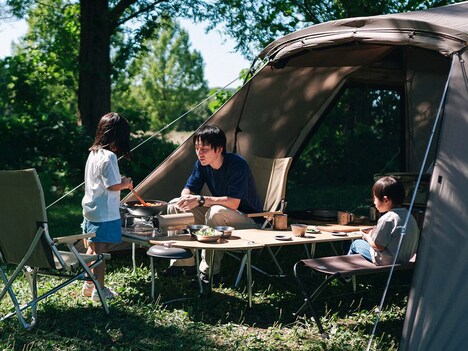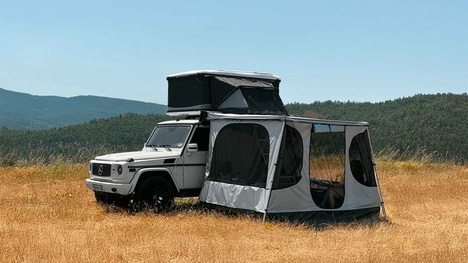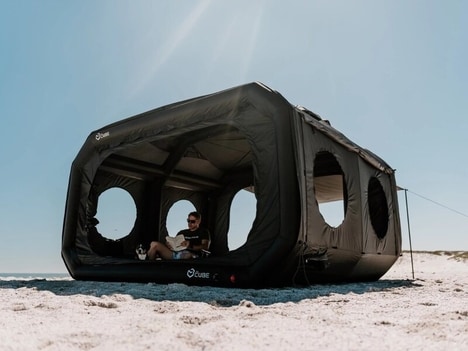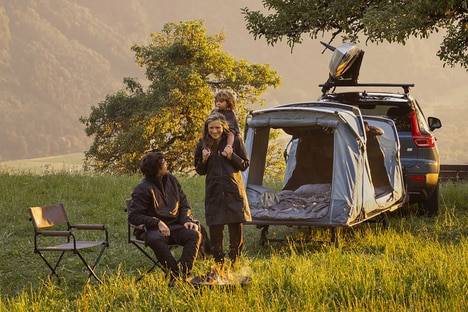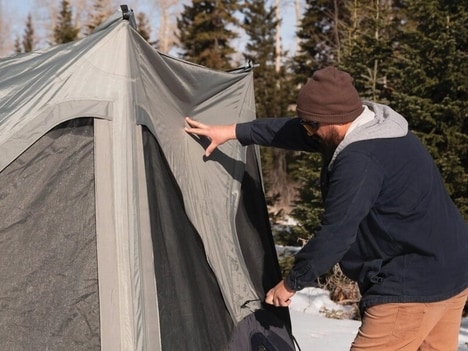
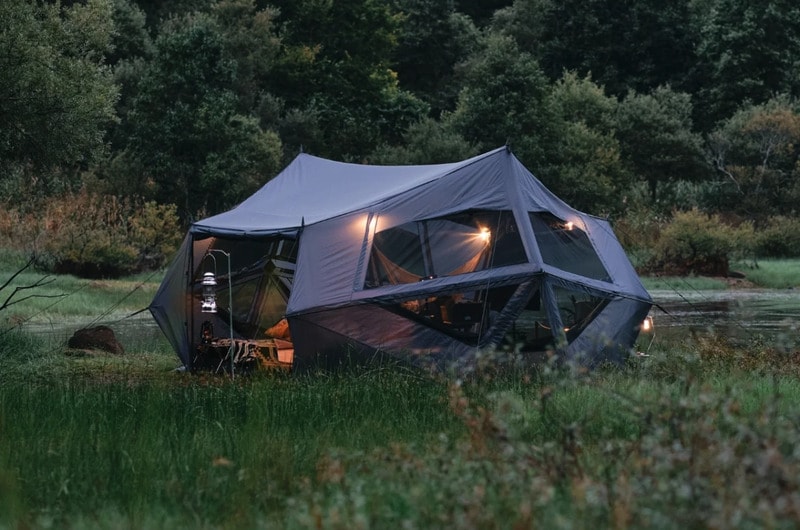
The 'Tokyo Crafts Grayhus' camping tent is a piece of equipment for adventurous explorers to help them stay protected from the elements, while also enjoying a spacious living area on a campsite.
The tent is constructed with waterproof and weatherproof materials that act as the roof and the walls, while the base of the unit doesn't have a floor. This is done to help maximize floorspace and also allow for easier setup, which is different from traditional tents that have built-in flooring but are skimpy on square footage.
The Tokyo Crafts Grayhus camping tent is well-suited for creating a safari-like style for a glamping experience and is designed to sleep four, but could accommodate more, depending on requirements.
Image Credit: Tokyo Crafts/Korogi
Why This Trend Is Growing
- Polyhedral Design
- Polyhedral camping tents introduce a geometric design that enhances both aesthetics and functionality, appealing to adventurous glampers seeking unique shelter options.
- Floorless Camping Shelters
- Innovative floorless design in camping shelters offers increased flexibility and ease of setup, catering to modern campers prioritizing adaptability and minimalistic footprints.
- Weather-resistant Campsites
- Advancements in weather-resistant materials for tents are setting new standards for durability and comfort, reshaping camping experiences under diverse climatic conditions.
Industries Being Reshaped
- Outdoor Leisure
- The outdoor leisure industry experiences a surge in demand for upgraded camping equipment, fostering innovation in durable, aesthetically pleasing shelters.
- Eco-friendly Travel
- Eco-friendly travel markets are incorporating weatherproof yet floorless campground accommodations, appealing to sustainability-conscious adventurers.
- Luxury Camping
- Luxury camping services expand their offerings with posh, polyhedral tents, meeting the growing need for upscale, safari-like camping experiences.