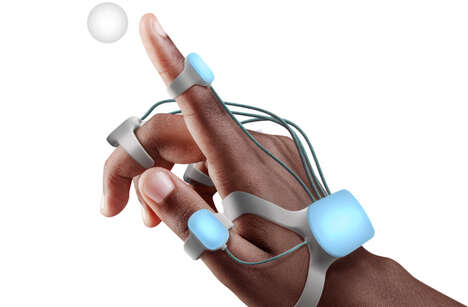
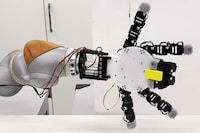
The Third Thumb is a unique prosthetic that was developed by Dani Clode and her team at University College London. Contrary to the usual use of prosthetics, which is to replace a lost limb; it actually enhances human capabilities by adding an extra thumb to the hand.
The Third Thumb is 3D-printed and attaches to the opposite side of the biological thumb. To control the device, it involves pressure sensors that are under the toes. This communicates in a wireless way through the gadget worn around the ankles. It is being tested through a range of lifestyle tasks including carrying various items: phones, keys, grocery bags, and more. It also helps with tasks such as cooking by holding food items in place while cutting, for example.
Image Credit: Dani Clode
Key Themes Behind This Trend
- Augmentative Prosthetics
- Innovative prosthetics that enhance rather than replace human abilities are pioneering new use cases and applications.
- 3d-printed Wearables
- The use of 3D printing technology to create personalized and complex wearable devices is revolutionizing traditional manufacturing processes.
- Wireless Sensor Integration
- Integrating wireless sensor technology into wearable devices allows for more intuitive and seamless human-machine interfaces.
Where This Applies
- Healthcare Innovation
- Advanced prosthetics that enhance capabilities are pushing the boundaries of traditional healthcare solutions.
- Consumer Electronics
- The merger of prosthetic technology with everyday electronics could create more multifunctional and versatile consumer products.
- 3d-printing Industry
- Rapid advancements in 3D printing are enabling the custom creation of intricate and functional wearable devices.