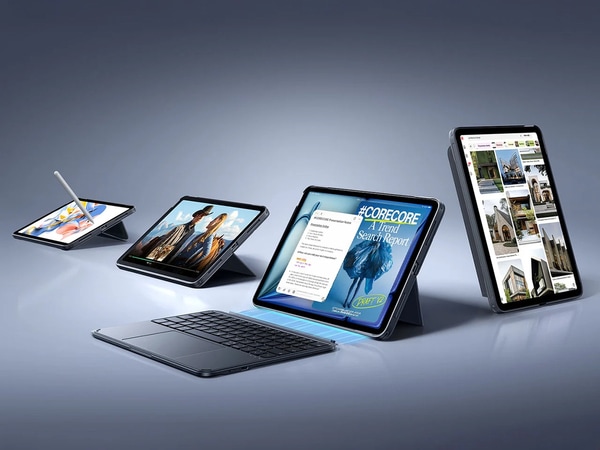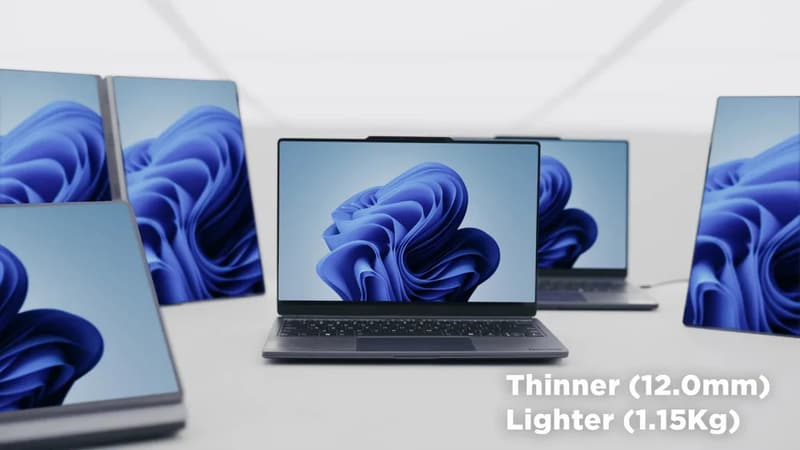
Lenovo's ThinkBook Modular AI PC Concept is a 14-inch laptop prototype that centres on physical adaptability through snap-on modules and a detachable secondary display. The system uses magnetic pogo-pin connections to mount a second 14-inch OLED screen to the back of the lid, beside the main display or in place of the keyboard deck. In the dual-screen configuration, the detached keyboard functions wirelessly and opens space for expanded workspace without compromising typing input. Modular I/O blocks let users reposition or exchange ports such as USB-C, USB-A and HDMI without tools, supporting bespoke connectivity layouts.
The secondary display also works as an independent portable monitor with an integrated kickstand in either landscape or portrait orientation. Lenovo’s prototype pairs this physical flexibility with a high-end internal specification including an Intel Core Ultra 7 processor, 32 GB of RAM and a 1 TB SSD. Battery capacity and commercial availability remain unconfirmed for the concept.
Image Credit: Lenovo
Key Themes Behind This Trend
- Modular Hardware Ecosystems
- A shift toward interchangeable laptop modules creates potential for customizable device lifecycles and third-party component marketplaces.
- Dual-screen Portable Workflows
- Expanding portable dual-screen setups suggests new forms of multitasking-oriented software and interface paradigms optimized for detachable displays.
- Magnetic Modular Connectivity
- Snap-on magnetic I/O blocks indicate opportunities for standardized detachable port systems that simplify hardware upgrades and reconfiguration.
Where This Applies
- Laptop Manufacturers
- Device makers could see product differentiation through modular chassis designs that enable incremental hardware upgrades and extended device longevity.
- Enterprise IT Procurement
- Corporate buyers may benefit from configurable fleet management models that reduce refresh costs by swapping modules instead of whole units.
- Accessory and Peripheral Makers
- Peripheral companies stand to develop a new class of certified snap-on accessories and portable displays tailored to magnetic module standards.