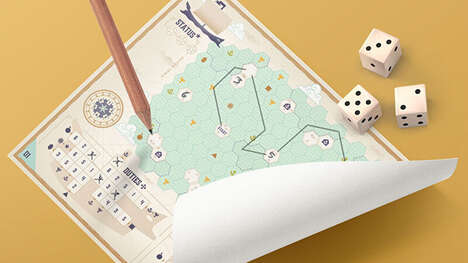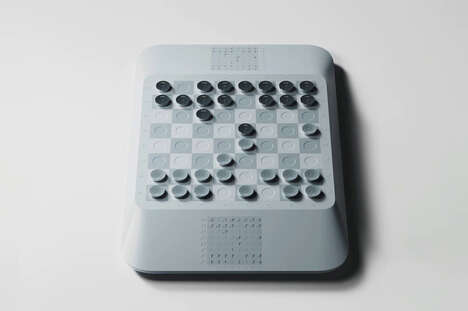
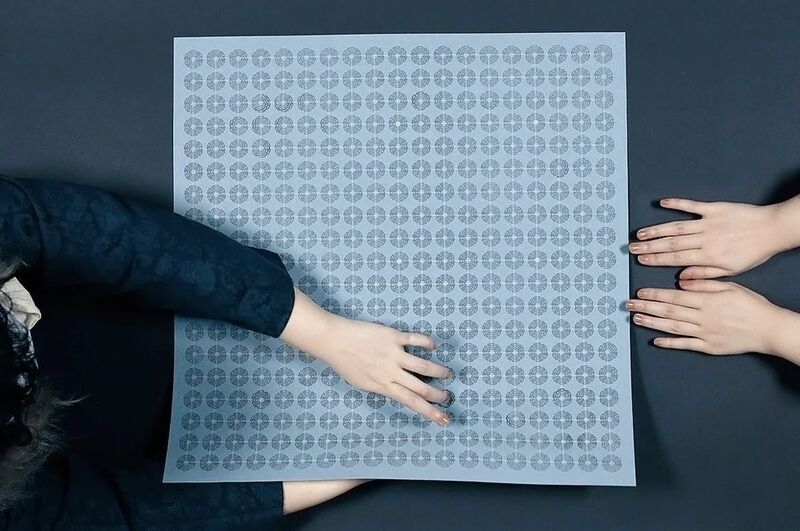
The Poppu was designed by Cheng Ka Wing Kavieng, Wei Ruo, Mak Ming Huen, and Wong Cheuk Laam after considering the impracticalities of the traditional Go board game. The game, also referred to as Weiqi, is popular in many East Asian countries. It accommodates two players as they attempt to capture and surround more territory than their opponent.
Traditional game sets are often ergonomically difficult to use, heavy, and not inclusive to the visually impaired. The designers of Poppu transformed the game into a portable and tactile setup made from paper. Inspired by Kirigami, a variation of Origami, Poppu uses foldable paper to replace the traditional stone pieces. The paper is embedded with patterns that players can pop downwards or upwards, signaling opposite teams.
Image Credit: Poppu
Why This Trend Is Growing
- Portable Board Games
- The trend towards paper-made portable board games like Poppu showcases a market need for practical and accessible board game solutions.
- Tactile Gaming
- The rise of tactile gaming, like with the Poppu board game, opens up new opportunities for inclusive and accessible gaming experiences.
- Redesigning Traditional Games
- Redesigning traditional games, such as the Poppu board game, shows the potential for innovation and creativity in creating practical yet unique solutions.
Industries Being Reshaped
- Toy Industry
- Toy companies can embrace paper-based solutions and tactile gaming trends to create more accessible and versatile board games for all demographics.
- Board Game Industry
- The board game industry can benefit from the trend of innovative and portable board games, such as Poppu, to reach new and diverse markets.
- Assistive Technology Industry
- The development of tactile and visually accessible technologies for gaming, like with Poppu, can lead to new innovations and solutions in the assistive technology industry.