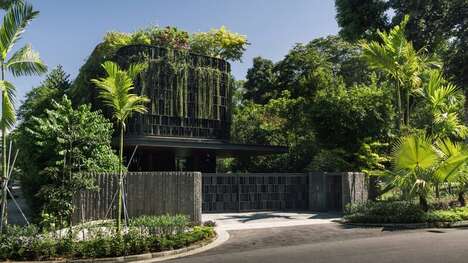
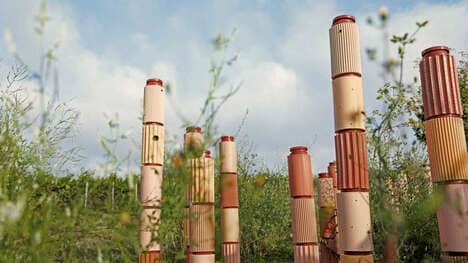
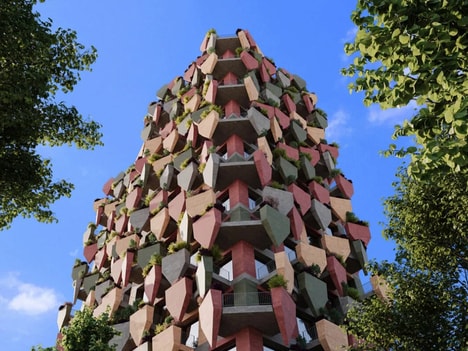
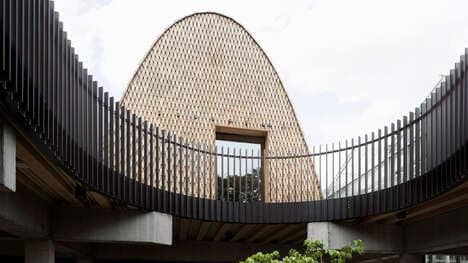
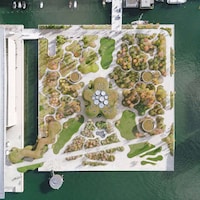
The Orquideorama is a monolithic series of towering "modular flower" structures at the heart of the Medellin, Colombia botanical garden designed by Plan B Architects' Felipe Mesa and Alexander Bernal.
Meant to symbolize the relationship between organic life forms and man-made structural forms, the giant complex contains 14 interlocking wood and steel flower structures that are used to house a wide number of public purposes like galas and events, as well as butterfly sanctuaries and lush garden projects.
What's Driving This Trend
- Modular Eco Architecture
- Exploring designs that combine sustainable materials and modular construction to create innovative ecological structures.
- Organic-structural Relationship
- Investigating the connection between organic life forms and man-made structural forms to inspire unique architectural designs.
- Multi-purpose Green Spaces
- Creating versatile green spaces that serve as event venues, sanctuaries, and botanical gardens to enhance public engagement with nature.
Who This Affects Most
- Architecture
- Architects can incorporate modular and sustainable elements into their designs, revolutionizing the industry.
- Event Planning
- Event planners can explore utilizing unique outdoor venues, like the giant honeycomb gardens, to create memorable experiences for attendees.
- Conservation and Environmental Science
- Scientists can study and develop new ways to integrate sustainable and nature-centric designs into urban areas for a better relationship with the environment.