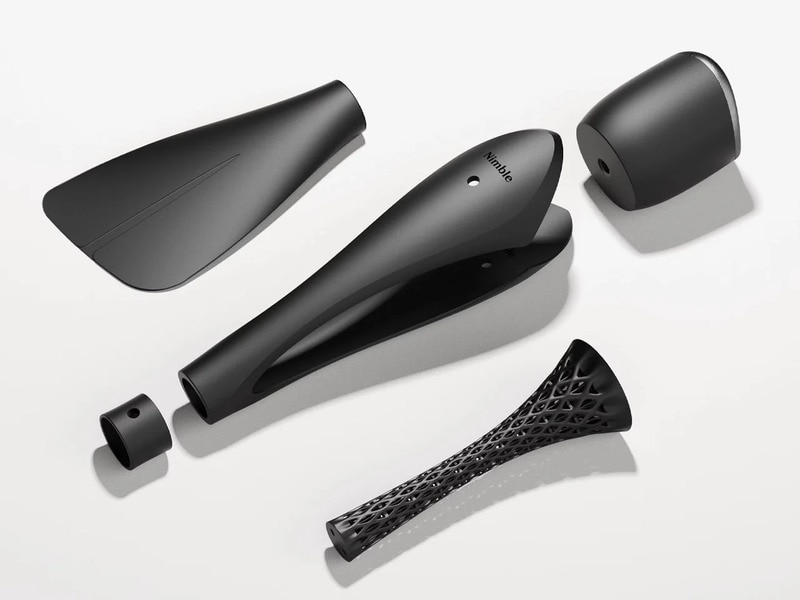
The Nimble lets below-knee amputees swim with greater efficiency by using a 3D-printed fin engineered by Essesi Design Studio to replicate the responsive power of a natural kick. The design features a lightweight carbon fibre shell paired with an internal lattice that compresses and rebounds in water to generate thrust. The geometry distributes force evenly across the structure to reduce strain on the user’s residual limb. A modular joint allows the fin to attach to standard socket interfaces and makes replacement or adjustment straightforward for swimmers who require a personalised fit and flex.
The fin focuses on both performance and comfort through its balanced stiffness and controlled flexibility. The ability to fine-tune lattice density enables designers to match the fin’s behaviour to different swimming styles while keeping weight low. Nimble presents an inclusive approach to aquatic mobility by offering amputees a tool that brings speed and confidence back into water environments.
Image Credit: Essesi Design Studio
What's Driving This Trend
- 3d-printed Prosthetics
- The use of 3D-printed components allows for customizable and precise prosthetic designs tailored to individual needs, enhancing user experience and accessibility.
- Modular Prosthetic Components
- Modular joint systems enable easy replacement and adjustment of prosthetic elements, providing users with adaptable solutions that can evolve with their physical requirements.
- Biomechanical Simulation in Design
- Designing prosthetics that mimic natural biomechanics can improve their functionality and user comfort, pushing the boundaries of what assistive devices can achieve.
Who This Affects Most
- Prosthetic Design and Manufacturing
- Advancements in material engineering and additive manufacturing are reshaping the prosthetic industry by offering more personalized and efficient solutions.
- Adaptive Sports Equipment
- The development of specialized adaptive equipment is driving innovation in sports technology, making it more inclusive for individuals with disabilities.
- Biomechanics and Ergonomics
- Research and innovation in biomechanics are informing ergonomic design practices, leading to new advancements in creating comfortable and functional assistive devices.