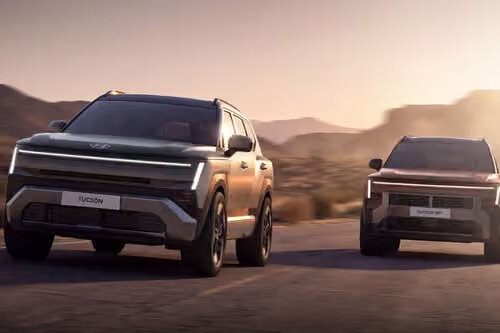
Hyundai has unveiled the fifth-generation 2027 Tucson, replacing the outgoing model’s curvier profile with a larger, more angular design shaped by the brand’s Art of Steel language. A full-width lighting bar sits above vertical H-shaped LED daytime running lights, while squared-off panels, sharp door creases, and beefier rocker panels give the crossover a more substantial stance. The vehicle grows to 185 inches long, adding 2.3 inches, while its track widens by 1.5 inches and wheelbase stretches to 109.6 inches. The changes create additional interior space, including more than an inch of rear headroom and wider-opening rear doors.
Inside, the redesigned cabin replaces the previous dual-screen arrangement with a centrally mounted, tablet-like Pleos infotainment system. A narrow digital gauge cluster sits behind a squircle four-spoke steering wheel, while floating dashboard elements, orange accents, and separated air vents add visual contrast. The returning XRT variant brings more rugged exterior detailing, including a boxier bumper, skid plate, black accents, and unique badging.
Image Credit: Hyundai
Why This Trend Is Growing
- Boxy Family Crossovers
- Sharper geometric styling and expanded proportions signal opportunity for automakers to reposition practical family vehicles with tougher, more premium visual identities.
- Tablet-centric Cabins
- Centralized infotainment interfaces create openings for software-led differentiation, connected services, and simplified interior architectures in mainstream vehicles.
- Rugged Urban Trims
- Off-road-inspired appearance packages reflect demand for adventure aesthetics without full capability upgrades, expanding margin potential through design-focused variants.
Industries Being Reshaped
- Automotive Manufacturing
- Larger crossover platforms with roomier cabins and bolder exterior language highlight evolving competition around utility, comfort, and brand distinction.
- In-vehicle Technology
- New infotainment layouts point to growing value in proprietary operating systems, app ecosystems, and user experience design inside everyday vehicles.
- Mobility Retail
- Distinct trims and family-oriented packaging give dealers and digital sales channels more ways to segment buyers by lifestyle, space needs, and design preference.