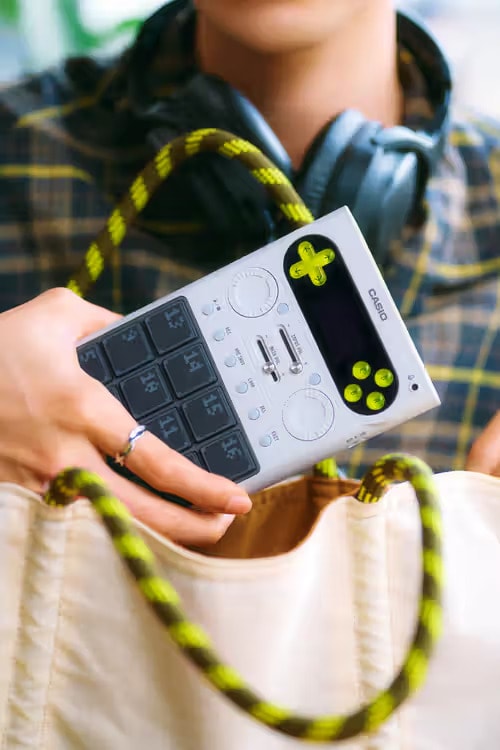
Casio’s SXC-1 is a portable standalone sampler designed to capture and manipulate audio without requiring a full studio setup. The device features a grid of responsive sampling pads arranged for finger drumming and sequencing, supported by a high-fidelity sampling engine capable of recording at professional rates. The interface is built for direct interaction, allowing users to trigger, edit, and arrange sounds through tactile input while maintaining low-latency performance across live sessions and pattern creation.
The SXC-1 supports multiple input and output configurations, enabling audio capture from instruments, external devices, or built-in sources, while also connecting to digital workstations for extended editing. Integrated software tools allow pitch adjustment, time-stretching, and waveform editing directly from the hardware interface. The device is structured to function as both a field recording tool and a sequencing unit.
Image Credit: Casio
Key Themes Behind This Trend
- Portable Standalone Sampling
- New compact samplers that combine pro-grade recording and editing enable on-the-go content creation that can displace larger studio-only workflows.
- Tactile Grid Interfaces
- Responsive pad grids designed for finger drumming and sequencing open possibilities for more intuitive hardware-first composition methods that compete with mouse-and-screen interaction.
- Hybrid Field-studio Workflows
- Devices capable of high-fidelity field recording plus integrated sequencing foster seamless transitions between location capture and polished production, challenging rigid studio pipelines.
Where This Applies
- Music Production Hardware
- Compact, multifunctional instruments present an avenue for hardware makers to unseat traditional multi-device rigs by consolidating sampling, sequencing, and effects in single units.
- Live Performance Technology
- Low-latency, tactile samplers introduce new performance paradigms where real-time manipulation of samples becomes central to stage shows, altering expectations for live electronic acts.
- Audio Software and Daws
- Integrated on-device editing tools create pressure for desktop DAWs to reimagine their feature sets and interoperability as hardware increasingly handles core production tasks.