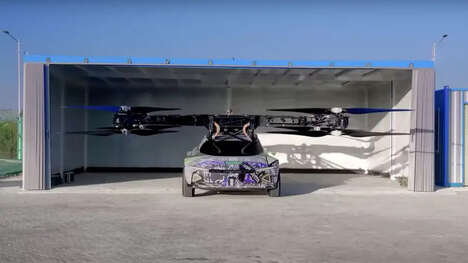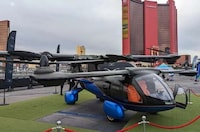

Samson Sky’s ‘Switchblade’ is currently one of the most innovative examples of transportation on the market. The ‘Switchblade’ is able to transform from a car to a full-fledged mini aircraft in just three minutes, while the tail and wings are collapsible for road trips and parking in a home garage. The ‘Switchblade’ comes equipped with an array of speedy specifications, including a maximum speed of 200 mph, a cruising speed of 160 mph, and a maximum driving speed of 125 mph.
Auto-pilot and regenerative braking features are also available, and the vehicle offers a reverse thrust feature that emulates a parachute if landing becomes difficult. A music system, a heads-up display, climate control, and security systems are examples of contemporary amenities.
The ‘Switchblade’ is currently being tested on the runway and has plans to complete a full test flight in the coming weeks. A full list of specifications and early reservations are available on the Samson Sky website.
Image Credit: Samson Sky
What's Driving This Trend
- Road-legal Flying Vehicles
- The emergence of road-legal flying vehicles is a disruptive innovation opportunity for the transportation industry.
- Transformable Vehicles
- Developing vehicles that can seamlessly transform from car to plane and back in under 3 minutes presents a disruptive innovation opportunity for the automotive and aviation industries.
- Personal Air Transportation
- The rise of personal air transportation through road-legal flying vehicles presents a disruptive innovation opportunity for the travel and leisure industries.
Who This Affects Most
- Transportation
- The transportation industry stands to benefit from the disruption caused by road-legal flying vehicles, which offer the potential to cut down travel time and expand travel options.
- Automotive
- The automotive industry has an opportunity to innovate by developing transformable vehicles that can seamlessly switch between car and plane modes.
- Aviation
- The aviation industry can capitalize on the emergence of road-legal flying vehicles by expanding personal air transportation options and developing new infrastructure to support them.