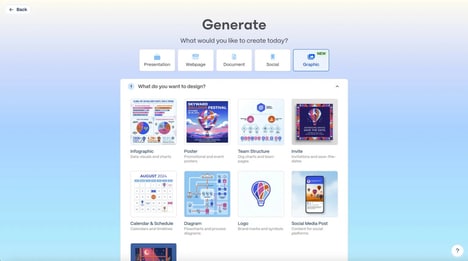
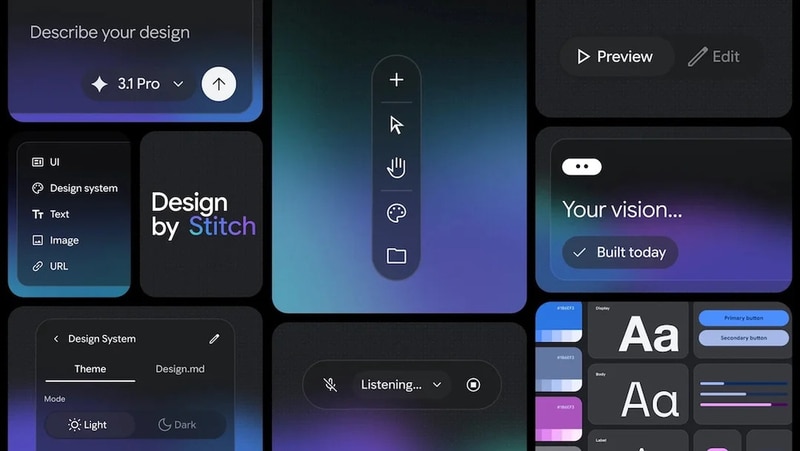
Stitch launched to bring ideas to life, beginning with the design process, and it's evolving into an AI-native software design canvas that turns natural language into high-fidelity UI designs. Stitch, the experimental tool from Google Labs, is now embracing "vibe design" so that anyone can quickly explore ideas just by describing a mood, a purpose, or the outcome they want, with the potential to turn their concept into a fully realized interface screen.
And with voice capabilities, users can speak directly to their canvas and have the agent respond in real-time to design critiques. For instance, a user may ask for "three different menu options," or "this screen in different color palettes" to get a better sense of their options and what might look best.
What Makes This Trend Stand Out
- AI-native Vibe Design Platforms
- Creates interfaces driven by mood and intent rather than manual layout, enabling rapid generation of contextually aligned high-fidelity screens.
- Natural Language-to-ui
- Transforms plain-language descriptions into production-ready UI elements, reducing the gap between concept and executable design assets.
- Voice-driven Design Iteration
- Allows real-time conversational critique and modification of design canvases, shortening feedback loops and democratizing iterative design.
Sectors Adopting This
- Software Design Tools
- Stitch-like capabilities could shift the product roadmap toward generative, intent-aware editors that replace repetitive interface engineering tasks.
- Digital Advertising Agencies
- Mood-based creative generation may enable rapid A/B testing of campaign visuals tailored to target emotions and campaign outcomes.
- UX Research and Usability Testing
- Real-time vibe-driven prototypes offer new methods for eliciting user reactions and validating design hypotheses without full development cycles.