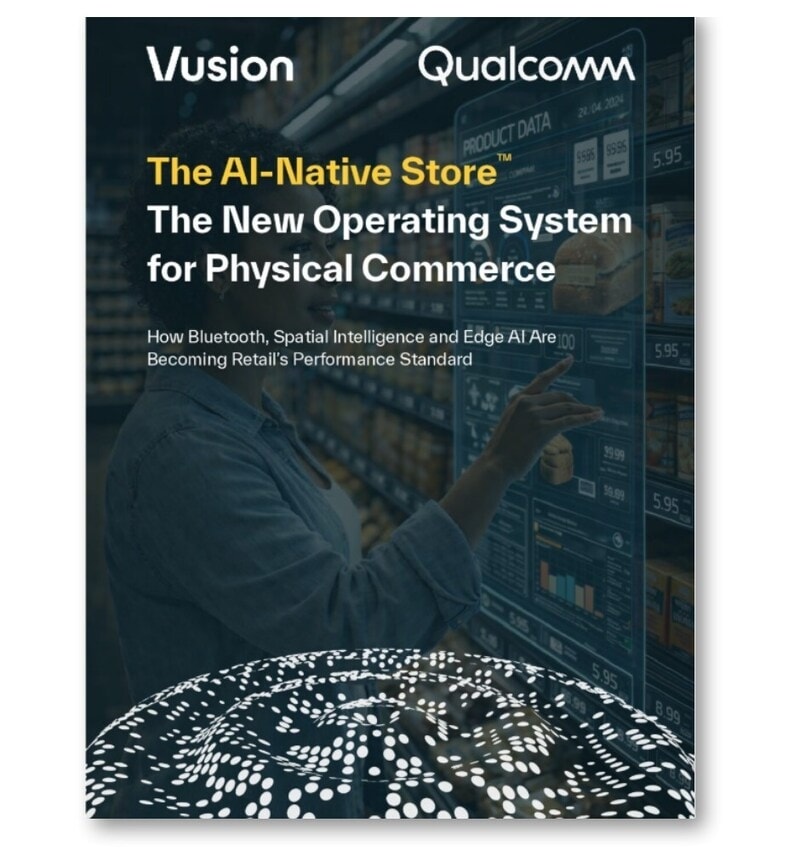
Vusion, in collaboration with Qualcomm, released a white paper detailing their vision for a new retail concept termed the AI-Native Store™. This research proposes a fundamental shift in how physical retail spaces operate through advanced technology integration.
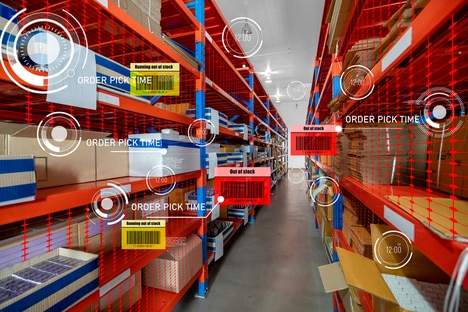
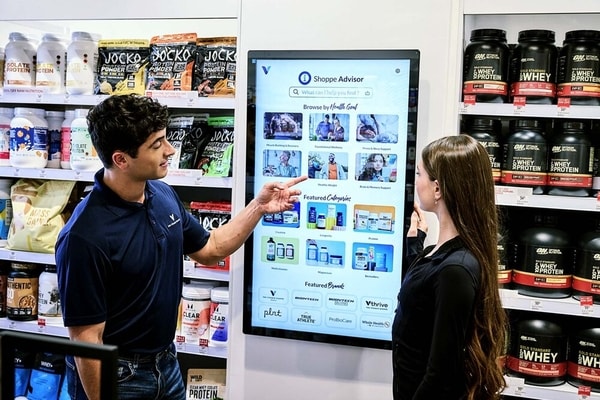
The AI-Native Store™ concept is built upon a foundation of Bluetooth Low Energy infrastructure, intelligent shelving systems, and on-device artificial intelligence, all working in concert to create a store environment that is interactive, responsive, and data-driven. The core idea is that by embedding edge sensors and connectivity throughout a store, the physical space itself can communicate with the Bluetooth-enabled devices that shoppers already carry — such as smartphones and wearables — to provide real-time guidance and personalized engagement.
Image Credit: Vusion x Qualcomm
What's Driving This Trend
- Edge AI Retail
- Stores embedding on-device AI enable real-time, privacy-preserving personalization that could displace cloud-dependent retail systems.
- Bluetooth Low Energy Commerce
- By turning shoppers' smartphones and wearables into persistent interaction points, BLE infrastructure can transform passive displays into context-aware engagement channels.
- Intelligent Shelving and Sensorization
- Shelves equipped with sensors and local processing create continuous inventory and behavioral telemetry that has the potential to upend traditional restocking and merchandising models.
Who This Affects Most
- Brick and Mortar Retail
- Physical retailers integrating pervasive sensors and edge AI can shift competitive advantage from price and location to personalized, in-store experiential differentiation.
- Wearable Device Manufacturers
- Device makers exposing BLE and context APIs stand to enable new commerce-driven capabilities that redefine the role of wearables as primary retail interaction tools.
- Smart Building and Facility Management
- Facility operators leveraging sensor-rich retail spaces could repurpose environmental and occupancy data to optimize space utilization and tenant services in ways that disrupt conventional building management contracts.