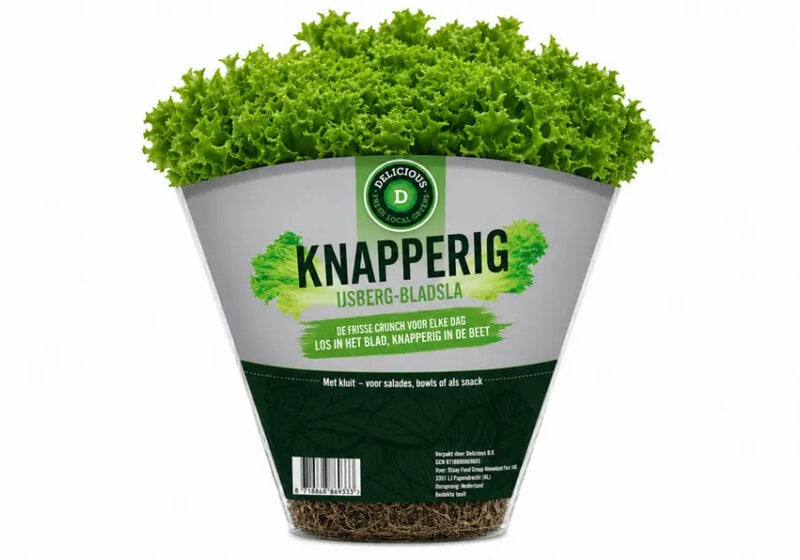
The Staay Food Group has announced an expansion of its protected cultivation product portfolio with the new iceberg leaf lettuce that responds to climate-driven supply chain changes.
The product was developed through a partnership with Deliscious and is a Rijk Zwaan variety that's grown hydroponically to accommodate production entirely indoors. This reacts to the vulnerability of outdoor lettuce crops and prioritize improved supply chain resiliency moving into the future. The lettuce is supplied with its root ball still attached to further extend freshness and shelf life, but can also come root ball-free for foodservice or industrial processor customers.
The new lettuce innovation from the Staay Food Group will also deliver improved water efficiency and stability thanks to the controlled environment setup.
What's Driving This Trend
- Climate-resilient Greens
- Indoor-grown lettuce varieties reflect a shift toward produce systems designed to withstand weather volatility and reduce dependence on vulnerable field crops.
- Root-ball Freshness
- Supplying leafy greens with roots attached creates new shelf-life models for retailers and distributors managing freshness, waste reduction, and premium positioning.
- Hydroponic Supply Stability
- Controlled-environment cultivation supports more predictable yields and water efficiency, opening pathways for localized and year-round fresh food production.
Who This Affects Most
- Controlled Agriculture
- Hydroponic and indoor farming providers are gaining relevance as food producers seek stable crop output amid climate-related supply disruptions.
- Fresh Produce Retail
- Grocery channels can differentiate through longer-lasting, climate-proof greens that align with consumer expectations for quality and reduced food waste.
- Foodservice Supply
- Restaurants and processors benefit from consistent lettuce formats that support operational reliability, flexible preparation needs, and resilient sourcing strategies.