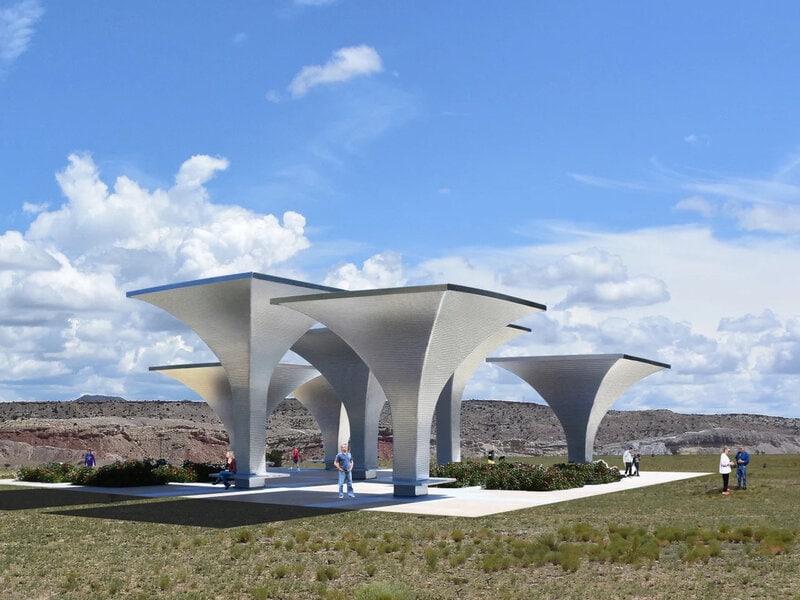
Solar Rain Funnels are a modular public infrastructure concept by designer Michael Jantzen that combines rainwater collection, solar energy generation and public seating within a single galvanized steel structure. Each funnel-shaped unit directs rainfall into collection channels while photovoltaic cells mounted around the upper edge generate electricity. A circular bench surrounds the base, creating a shaded gathering area beneath the canopy formed by the wide funnel.
The collected rainwater is stored below ground or directed to off-site storage systems to be used later. Meanwhile, the electricity generated by the solar panels powers water pumps, nighttime lighting and on-site charging stations, with surplus energy supplied to the local grid. The prefabricated structures are assembled from bolted components and can be installed individually or grouped into larger arrays.
Image Credit: Michael Jantzen
What Makes This Trend Stand Out
- Multi-function Urban Fixtures
- Public infrastructure that combines utilities, comfort and energy services creates new value from limited civic space while reducing the need for single-purpose installations.
- Solar-powered Water Harvesting
- Pairing photovoltaic generation with rainwater capture enables self-sustaining systems that support irrigation, lighting and device charging in parks, plazas and transit areas.
- Modular Climate Amenities
- Prefabricated shaded structures offer scalable resilience benefits as cities adapt public spaces for heat mitigation, stormwater management and distributed clean energy.
Sectors Adopting This
- Urban Planning
- City planners can incorporate integrated shelter, water and power systems into public realm upgrades that address climate resilience and community gathering needs.
- Renewable Energy
- Distributed solar applications expand beyond rooftops through street-level infrastructure that blends power generation with everyday public services.
- Water Management
- Decentralized rainwater collection systems introduce alternatives to conventional drainage by capturing runoff for reuse near the point of collection.