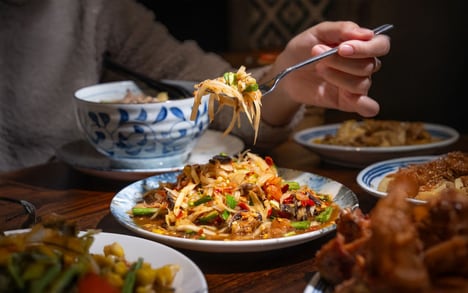
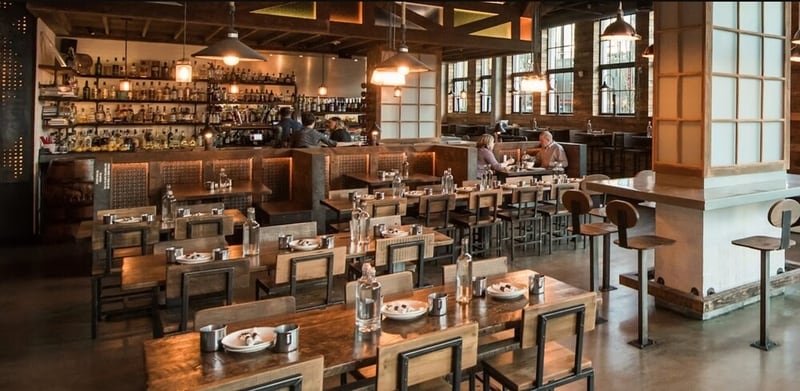
SOI at Capitol Hill incorporates Nam Jim Jaew into several of its prepared dishes, using the sauce as a defined component rather than a general condiment. Menu items such as Naam Si Krong Moo combine house fermented pork ribs with ginger, garlic, and Nam Jim Jaew, indicating that the sauce is integrated directly into the seasoning profile. A similar approach appears in Peek Gai Tod Krateam, where jumbo chicken wings are stir fried with garlic and the same roasted chili based sauce. The restaurant applies Nam Jim Jaew as part of the core flavor structure of select dishes.
Across these preparations, the use of Nam Jim Jaew aligns with its established role in regional Thai cooking, where it contributes acidity, heat, and roasted chili characteristics to complement protein focused dishes. The presence of the sauce in both pork and chicken offerings suggests a targeted application that supports the restaurant’s broader emphasis on traditional flavor combinations.
Image Credit: SOI - Capitol Hill
Key Themes Behind This Trend
- Sauce-centric Menu Design
- A market where sauces serve as defining elements supports development of modular flavor platforms and branded culinary IP that reconfigure dishes around signature condiments.
- Fermentation-forward Proteins
- Incorporation of house-fermented proteins alongside bold sauces highlights potential for novel preservation techniques and premium fermented product lines tailored to upscale dining.
- Regional Flavor Integration
- Elevating traditional regional sauces into core-seasoning roles signals demand for authentic ingredient sourcing and terroir-driven branding across menu portfolios.
Where This Applies
- Restaurant Chains
- Chain operators that standardize sauce-centric recipes could enable scalable signature flavor experiences and new licensing or co-branding business models.
- Food Manufacturing
- Manufacturers focused on shelf-stable artisanal sauces may find room for premium co-packaged protein-and-sauce offerings and customized bulk formulations for foodservice clients.
- Culinary Technology
- Kitchen-tech providers that optimize integration of fermented ingredients and concentrated sauces could facilitate productized flavor modules and precision seasoning systems.