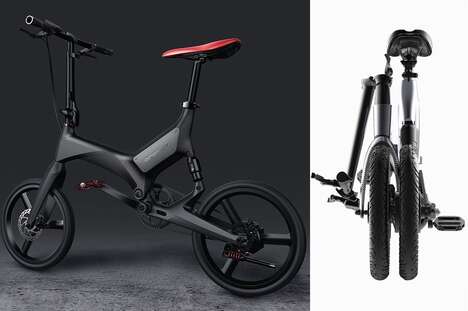

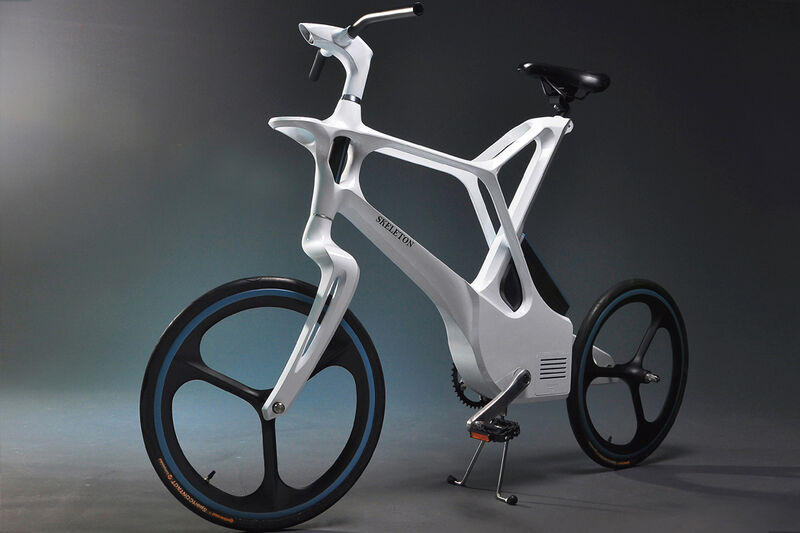
The conceptual 'Skeleton' electric bike has been designed by Gary Liao as an eco-friendly transportation solution that works to mimic the human body's bone structure. The electric bike maintains an upright riding position that calls to mind Dutch-style bikes that are built for short commutes in urban areas, while also making it easier to maneuver in tighter spaces. The bone pillar maintains a hollow construction yet still provides a strength that is similar to concrete and steel.
The conceptual 'Skeleton' electric bike can be switched between speed-assist modes through the mid-mounted motor that provides power to the rear wheel. The battery is fit into the rear of the frame similar to a diskette, which makes it easier for riders to remove and recharge at the end of the day.
What Makes This Trend Stand Out
- Skeletally Constructed Bikes
- Creating skeletal bike frames that mimic bone structure can disrupt the design and manufacturing processes of traditional bikes.
- Eco-friendly Transportation Solutions
- Designing eco-friendly transportation solutions like the Skeleton electric bike can provide a disruptive alternative for the urban commuter market.
- Mid-mounted Motors
- Integrating mid-mounted motors into bikes like the Skeleton electric bike can provide a disruptive innovation opportunity for the electric bike market.
Sectors Adopting This
- Bicycle Manufacturing
- Manufacturers can integrate skeletal structures to change the traditional bicycle design process, providing an opportunity to disrupt the bicycle manufacturing industry.
- Sustainable Transportation
- Eco-friendly transportation solutions like the Skeleton electric bike can disrupt the traditional transportation industry by meeting the needs of a growing environmentally-conscious population.
- Electric Bike Production
- Integrating mid-mounted motors into bikes like the Skeleton electric bike can disrupt the production and design processes of traditional electric bikes.