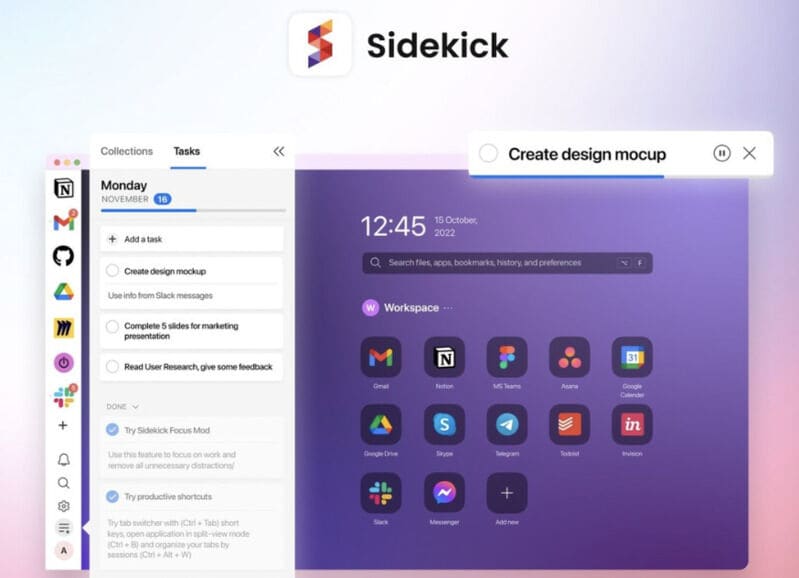
The new Sidekick browser is designed to be free is distractions and operates quickly, described as “a lightning-fast browser that works as an operating system and feels like a wellness app." It is also simultaneously protecting user data and the project was led by founder and CEO Dmitry Pushkarev, who happens to be a former Amazon executive, a Stanford Ph.D. in Molecular Biology, and has ADHD.
The app is not a new concept, having been around for a few years but the company now taps a team of neuroscientists to help fortify the new browser that is developed with features that simplify the process for those that have ADHD. The site describes it as “Your usual browsing toolbox is unfit for online work… They manipulate your online habits in order to keep your focus on redundant pages and search results."
Image Credit: @sidekick.browser
Key Themes Behind This Trend
- Distraction-free Browsers
- There is growing demand for web browsers that minimize distractions and promote focused work like Sidekick, which can disrupt the conventional browser market.
- Wellness Technology
- The development of Sidekick and similar apps are part of the larger trend in wellness technology, offering users a tool for online self-care and potentially disrupting the traditional healthcare market.
- Neuroscience-based Design
- Sidekick's use of neuroscientists to inform its design and functionality highlights a growing trend in incorporating scientific research to improve user experience in tech products.
Where This Applies
- Software Development
- Companies working in software development can leverage the ADHD-friendly design principles found in Sidekick to appeal to the growing demand for productivity and wellness tools in the workplace.
- Healthcare
- The wellness technology trend, including apps like Sidekick, offer the potential to disrupt traditional healthcare models by providing users with accessible and affordable tools for managing mental health.
- Education Technology
- Sidekick's emphasis on improving users' focus and mental clarity make it a potential disruptive innovation in the education technology industry, as tools that can help students better focus on learning are in high demand.