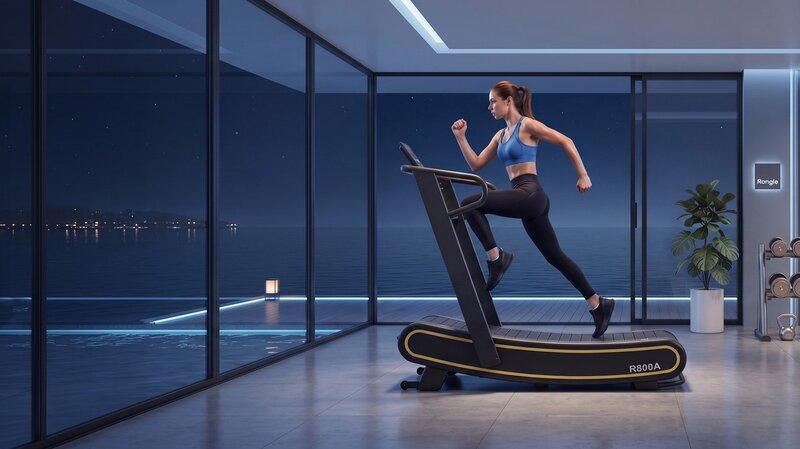
Rongle's 'R800A' brings self-powered running to home workouts with a curved manual deck and 8 resistance settings that let users shift from free walking to heavier sled-style pushes. The treadmill has no motor, so the belt responds directly to how fast you walk, jog, or sprint, and it stops when you stop.
A magnetic knob adjusts the load without changing machines, which is useful for walkers, joggers, and sprinters sharing one setup. The belt spans 59 x 15.7 inches, and its grippy, cushioned rubber surface keeps footing steady while easing impact on the knees.
At $1,349, the R800A is a home option for people who want a quiet treadmill without the usual motorized setup. Its folding frame and transport wheels make it easier to live with in tighter spaces, while the built-in display keeps core workout stats in view.
Image Credit: Rongle
What's Driving This Trend
- Manual Fitness Equipment
- Motor-free workout machines create openings for quieter, lower-maintenance home fitness products that reduce energy use while preserving high-intensity performance.
- Adjustable Resistance Training
- Integrated resistance controls expand single-machine versatility by allowing households to shift between walking, sprinting, and strength-style conditioning.
- Compact Home Gyms
- Foldable, transportable fitness designs reflect demand for premium exercise experiences that fit smaller living spaces without dedicated workout rooms.
Who This Affects Most
- Home Fitness
- Self-powered cardio equipment signals potential for differentiated home gym products that combine commercial-style training intensity with residential convenience.
- Sporting Goods
- Durable curved treadmills and grippy cushioned belts introduce product opportunities around performance-focused gear for amateur athletes and everyday users.
- Wellness Technology
- Simple displays and human-powered mechanics point to a market niche for low-complexity connected or semi-connected wellness devices built around reliability and ease of use.