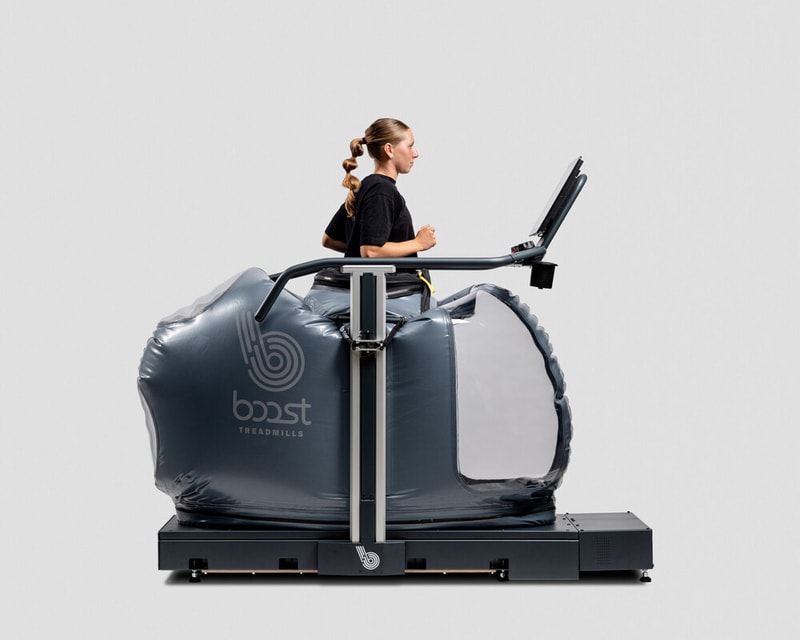
Boost Treadmills has launched the Boost 3 — a microgravity treadmill that uses differential air pressure (DAP) technology originally developed at NASA Ames Research Center. The innovation has been inducted into the Space Technology Hall of Fame alongside the agency and the product's founders.
Boost Treadmills' Boost 3 microgravity treadmill creates a pressurized chamber around the user's lower body, which allows for precise reduction of gravitational load in one percent increments so that a person can bear anywhere from 20% to 100% of their body weight while walking or running.
Boost Treadmills is ideal for homes, physical therapy clinics, and wellness centers. While the price tag sits at $24,999, which the brand maintains is "significantly cheaper than comparable systems," the microgravity treadmill also has rental options starting at "$499 per month for home users and $599 per month for commercial facilities."
Image Credit: Boost Treadmills
Key Themes Behind This Trend
- Personalized Gravity Modulation
- Precise one-percent increments in weight-bearing create opportunities for tailored rehabilitation protocols and performance training that adapt to individual biomechanics and recovery stages.
- Spacetech Commercialization
- The adaptation of NASA-derived differential air pressure systems for consumer and clinical markets signals new pathways for commercializing space-grade technologies at accessible price points.
- Subscription-based High-end Fitness
- Rental and monthly-payment models for premium equipment enable broader user access and recurring revenue structures that shift capital expenditure to operating expenditure for end users.
Where This Applies
- Physical Therapy and Rehabilitation
- Clinics could leverage microgravity treadmills to expand treatment capabilities for gait retraining, post-operative recovery, and neurological rehabilitation with precise load control.
- Home Wellness and Consumer Fitness
- High-cost, space-grade fitness devices offered with rental options may drive adoption among affluent home users seeking medical-grade training and recovery tools without full purchase commitment.
- Sports Performance and Athletic Training
- Athletic programs may integrate adjustable weight-bearing treadmills for injury prevention, graduated return-to-play protocols, and performance optimization under controlled loading conditions.