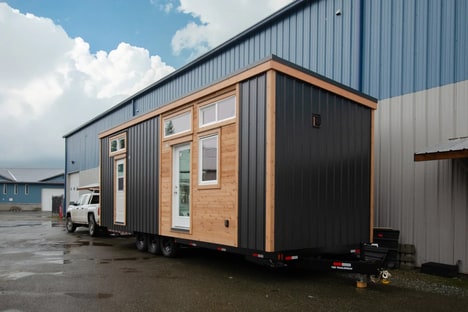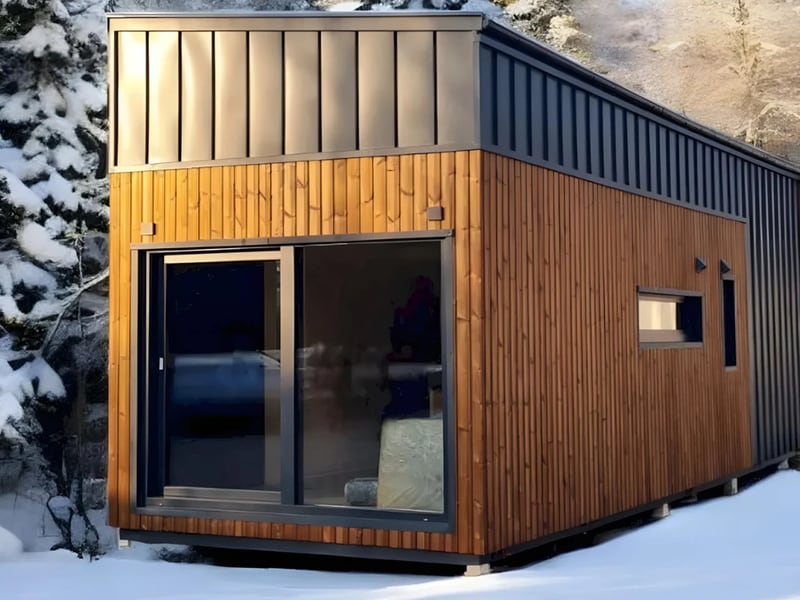
The Samuel is a non-towable modular tiny home developed by Craft House for full-time residential living. Measuring 10 metres long and 3.2 metres wide, the structure exceeds the proportions of many towable tiny homes, allowing for a more open apartment-style layout. The exterior combines engineered wood and metal cladding beneath a single-pitched roof that reaches 4.1 metres at its highest point. Inside, the home includes a 26-square-metre ground floor, a 13-square-metre mezzanine level, and a separate bathroom layout designed to support two sleeping areas.
The home's widened footprint creates space for a larger kitchen, open circulation paths, and increased headroom across the mezzanine level. Optional off-grid upgrades are also available for installations beyond traditional urban infrastructure.
Image Credit: Craft House
What's Driving This Trend
- Stationary Modular Living
- A shift from towable units toward permanently sited modular homes enables larger floorplans and apartment-like amenities within compact footprints, opening space for standardized plug-and-play foundations and neighborhood-scale infill solutions.
- Width-first Tiny Homes
- Prioritizing increased width over portability creates opportunities for interior layouts that mimic conventional apartments, making small-footprint dwellings more livable for long-term residency and niche demographics seeking comfort in minimal spaces.
- Off-grid Modular Upgrades
- Optional off-grid packages bundled with factory-built modules encourage integration of prefabricated renewable energy, water, and waste systems that support deployment beyond traditional utility networks and enable decentralized living models.
Who This Affects Most
- Residential Construction
- Expanding acceptance of non-towable modular homes prompts new construction protocols and site-prep services tailored to rapid installation of wider, permanent tiny dwellings within urban and rural lot constraints.
- Modular Manufacturing
- Factory-built wider modules demand retooled production lines and transport logistics focused on larger components and integrated finishes, driving innovation in scalable prefabrication methods and quality control.
- Sustainable Energy Systems
- The availability of off-grid options creates market pull for compact, modular renewable energy and storage systems designed specifically to match the power, water, and waste profiles of small permanent residences.