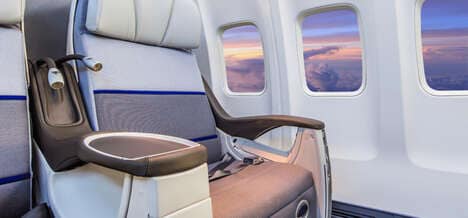
Researchers from North Carolina State University and MIT have collaborated to create a special rubber membrane that will help reduce noise inside airplanes. While the honeycomb-structure paneling used in airplane cabins and wings does a great job keeping planes' weight down without compromising on strength, they don't do a great job blocking noise.
This rubber membrane is made from rubber that's just a quarter of a millimeter thick and is adhered to one side of a piece of the honeycomb paneling. Once it place, it acts much like the skin of a drum, causing incoming sound waves to bounce back instead of infiltrating the cabin.
This simple solution is a work of genius because it is inexpensive and will improve passenger comfort without hampering airplanes in any way.
Key Themes Behind This Trend
- Noise-reduction Technology
- Opportunities for disruptive innovations in the field of soundproofing technology to improve passenger comfort in transport vehicles.
- Lightweight Material Enhancement
- Opportunities for disruptive innovations in developing lightweight materials with improved soundproofing capabilities.
- Smart Cabin Design
- Opportunities for disruptive innovations in designing smart cabin interiors that optimize passenger comfort and experience while reducing noise pollution.
Where This Applies
- Aviation
- Opportunities for disruptive innovations in designing quieter and more comfortable airplanes that enhance passenger experience and reduce noise pollution.
- Automotive
- Opportunities for disruptive innovations in developing soundproofing technology for cars and other transport vehicles that enhance passenger comfort and reduce noise pollution.
- Construction
- Opportunities for disruptive innovations in designing buildings and infrastructure that incorporate soundproofing technology to reduce noise pollution and enhance the quality of life for residents and users.