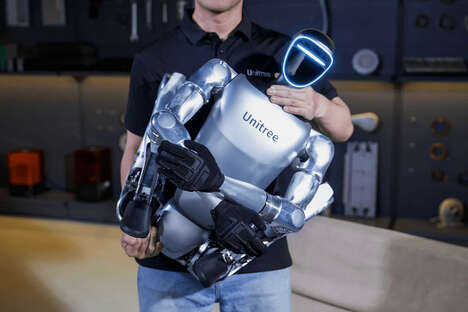

The US army is developing a robot that can rescue wounded soldiers on a battlefield. The remote-controlled robot is called Battlefield Extraction-Assist Robot (Bear). Its capability will be travel over bumpy terrain while carrying a wounded soldier in its arms. The prototype can lift more than 135kg (300lb) with one arm and climb stairs while holding a human-sized dummy. The robot's face looks like a teddy bear with and ears and big eyes. It is expected to be ready for a field test within five years.
What Makes This Trend Stand Out
- Robotic Rescue Technology
- The development of the BEAR robot showcases the trend of using robots for rescuing injured soldiers on the battlefield, opening up opportunities for further advancements in robotic rescue technology.
- Remote-controlled Robotics
- The use of remote-controlled functionality in the BEAR robot highlights the trend of utilizing remote control in robotic systems, presenting opportunities for advancements in remote-controlled robotics in various industries.
- Enhanced Robotic Lifting Capacities
- The BEAR robot's ability to lift over 135kg (300lb) with one arm demonstrates the trend of developing robots with increased lifting capacities, creating opportunities for applications in heavy lifting and logistics.
Sectors Adopting This
- Military and Defense
- The development of the BEAR robot has disruptive innovation opportunities in the military and defense industry, where it can revolutionize search and rescue operations on the battlefield.
- Robotics and Automation
- The advancements showcased by the BEAR robot open up disruptive innovation opportunities in the robotics and automation industry, driving the adoption of robotic systems for various applications beyond military use.
- Healthcare and Medical
- The capabilities of the BEAR robot in lifting and transporting wounded soldiers highlight disruptive innovation opportunities in the healthcare and medical industry, where similar robotic systems can aid in patient transport and care.