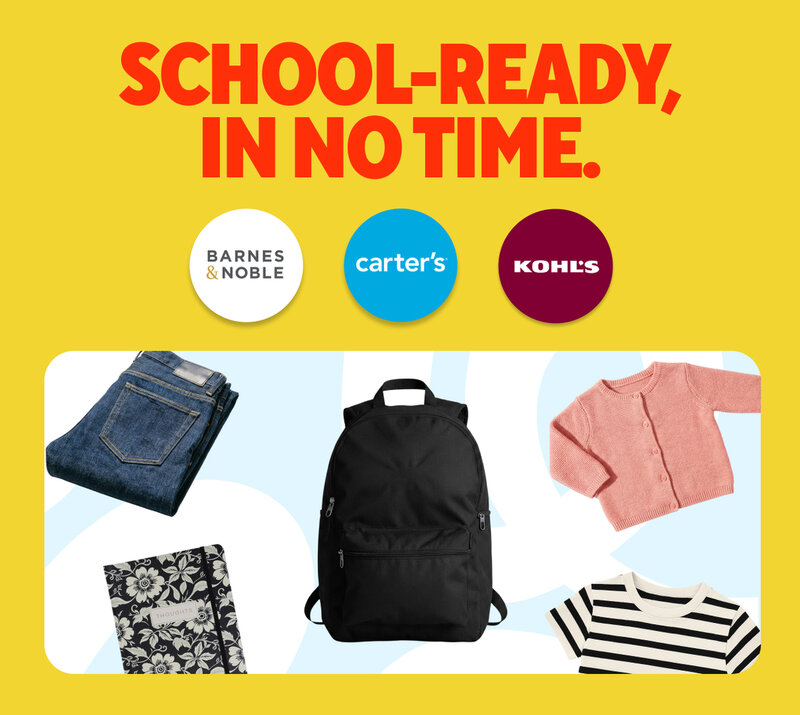
DoorDash has welcomed Barnes & Noble, Carter's and Kohl's to its back-to-school retailer lineup, offering parents on-demand delivery of school supplies, kids' apparel and department store essentials within an hour. Barnes & Noble marks DoorDash's first large-scale offering of books, spanning required reading lists, workbooks and stationery, while Kohl's introduces the platform's first department store selection, covering apparel to home goods.
Carter's offers DoorDash's largest selection of kids' apparel and essentials, addressing last-minute needs such as forgotten picture-day outfits or sports uniforms.
The expansion builds on DoorDash's broader retail push, which reached more than 60% of the U.S. population, with a median delivery time under 30 minutes, across more than 22,000 ZIP codes in Q1. DoorDash's expanding retail partnerships show that on-demand delivery is moving beyond food.
Image Credit: DoorDash
What's Driving This Trend
- On-demand School Shopping
- Rapid delivery of books, apparel and supplies reshapes seasonal retail by turning time-sensitive back-to-school purchases into near-instant fulfillment experiences.
- Marketplace Retail Expansion
- Delivery platforms are broadening beyond food into books, department stores and children's apparel, creating new competitive pressure for traditional e-commerce and store-based retail.
- Last-minute Family Commerce
- Parents' urgent needs for forgotten outfits, uniforms and classroom materials highlight a growing market for convenience-led retail services built around household unpredictability.
Who This Affects Most
- Retail
- Department stores, bookstores and specialty apparel brands gain new digital reach as third-party delivery networks become alternative storefronts for everyday and seasonal purchases.
- Logistics
- Sub-hour fulfillment across thousands of ZIP codes reflects rising demand for localized delivery infrastructure that can support increasingly diverse product categories.
- Education
- Required reading lists, workbooks and classroom supplies entering on-demand channels signal new connections between school planning, retail access and household convenience.