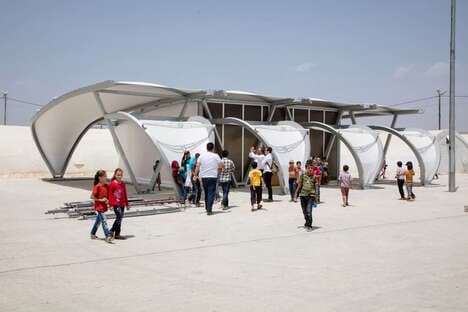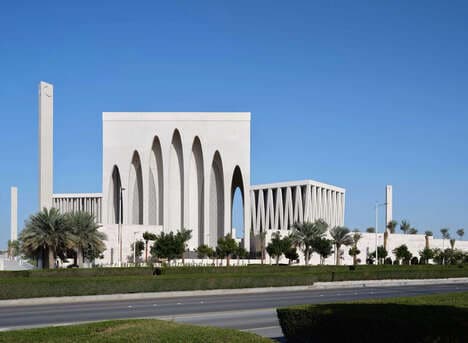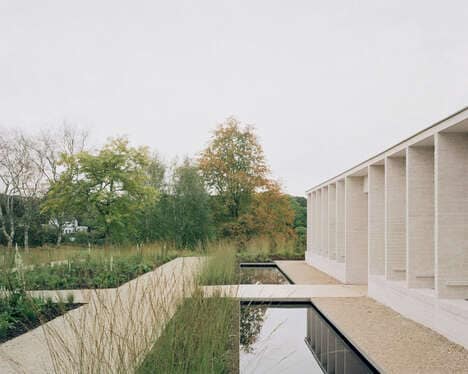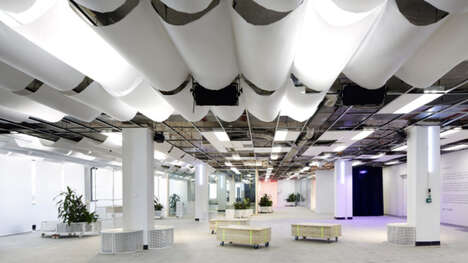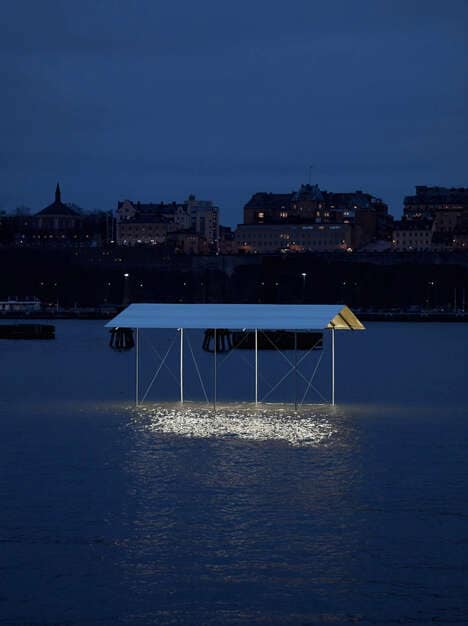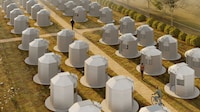
Yale architecture students Lucas Boyd and Chad Greenlee decided to use their skills to accommodate all religions in refugee camps and introduced three design proposals for pop-up religious buildings.
While most would create a universally accepted space in which people of all faiths could practice their religion, the students wanted to ensure that their designs were modeled after their aspirations of religious plurality. As a result they designed three different pop-up religious buildings that accommodate people of Jewish, Muslim and Christian faiths. While the concept of creating pop-up buildings for faiths did risk caricaturing the history and design of religious architecture -- they managed to design minimal spaces that take into account yet still simplify large-scale architecture of its kind. The religious buildings also aim to accommodate various sects within the religions themselves.
Accommodating religious plurality in refugee camps sends a message that these groups of people are united in their willingness to build communities and relationships together.
Key Themes Behind This Trend
- Pop-up Religious Buildings
- Designing pop-up religious buildings for diverse faiths in refugee camps.
- Religious Plurality
- Promoting religious diversity and inclusivity in design.
- Minimal Architecture
- Creating simplified, yet functional spaces for religious practice in refugee camps.
Where This Applies
- Architecture
- Exploring innovative designs for temporary religious structures.
- Refugee Support Services
- Providing inclusive spaces for religious worship in refugee camps.
- Interfaith Dialogue
- Promoting dialogue and understanding among diverse religious communities in refugee settings.