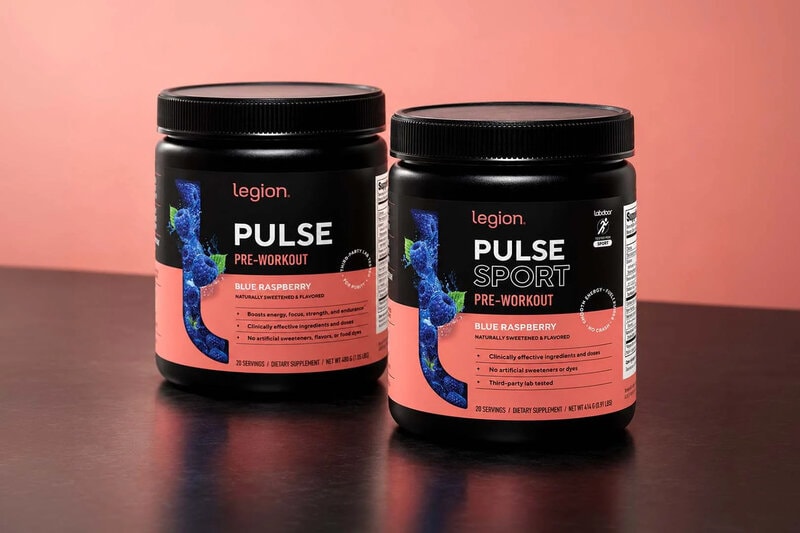
Legion's Pulse Sport pre-workout trims key doses for a milder energy boost while retaining core performance ingredients. The product is a Walmart-specific version of Pulse designed to deliver smoother stimulation with reduced stimulant levels and the same serving count.
Pulse Sport contains 3.6 g of beta-alanine, 2.5 g of betaine, and 300 mg of alpha-GPC per serving, and uses 6 g of citrulline malate instead of 8 g. Caffeine and theanine are reduced to 200 mg each from the original 350 mg, and the tub contains 20 servings. Two flavors are listed: Fruit Punch and Blue Raspberry, and it is priced at $29.99 at the retailer.
The lower stimulant profile provides consumers with a milder, more controllable pre-workout experience while maintaining key ergogenic doses. The $20 price point makes it a cost-effective alternative for shoppers seeking familiar ingredients with reduced intensity.
Image Credit: Stack3d
Why This Trend Is Growing
- Milder Performance Formulas
- Lower-stimulant supplement blends create space for consumers who want fitness benefits without the intensity associated with high-caffeine products.
- Retailer-specific Supplements
- Exclusive mass-market formulations allow brands to tailor ingredient levels, pricing, and positioning for value-focused shoppers in specific retail channels.
- Budget Ergogenic Nutrition
- Affordable performance powders with recognizable active ingredients broaden access to sports nutrition for mainstream consumers balancing efficacy and cost.
Industries Being Reshaped
- Sports Nutrition
- Reduced-dose pre-workout products signal a shift toward more flexible energy profiles that serve both casual exercisers and experienced gym users.
- Mass Retail
- Store-specific wellness products give retailers differentiated shelf offerings while helping supplement brands reach price-sensitive national audiences.
- Functional Beverages
- Powdered energy and performance formats highlight demand for customizable functional drinks that offer smoother stimulation and daily usability.