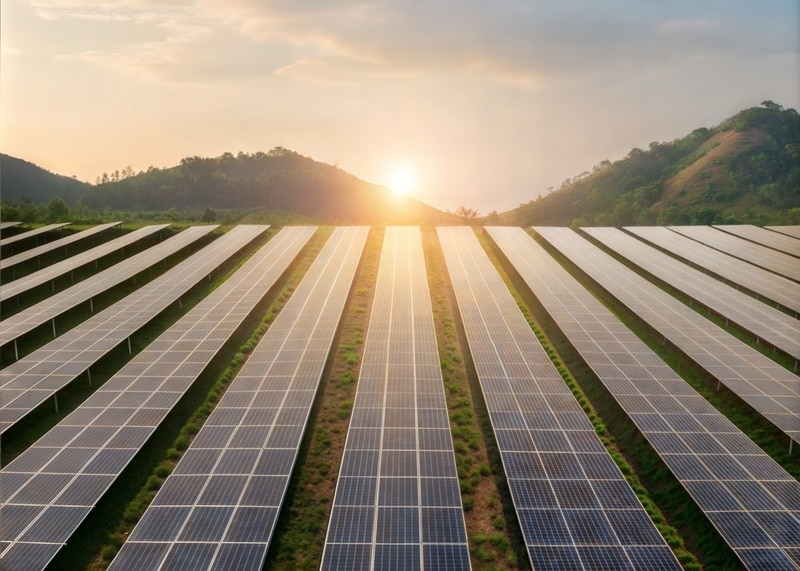
Rajasthan updates its land allocation norms for large-scale renewable projects, reflecting recent advances in solar and wind technology. The update, which is awaiting clearance from the state’s revenue department, recalibrates how much land developers can access per megawatt of capacity; signaling a push toward more space-efficient clean power.
The policy refresh also covers other setups such as crystalline PV with tracking systems, thin-film solar installations, and standalone wind projects. Hybrid plants that combine solar and wind will now have their land needs calculated separately for each component, helping avoid over-allocation. Officials clarified that these ceilings are distinct from minimum land requirements used for grid-connection approvals, which serve only to verify that developers control enough land to realize at least half of their planned capacity.
As higher-efficiency solar modules and larger wind turbines become standard, this kind of policy realignment shows how land governance is evolving alongside clean energy hardware.
Image Credit: Shutterstock / VectorStockbd
What Makes This Trend Stand Out
- Space-efficient Solar Technology
- New land allocation norms reflect a shift towards optimizing land use in deploying advanced solar technologies that demand less space per capacity unit.
- Hybrid Energy Projects
- The recalibration of land requirements for hybrid projects, combining solar and wind power, promotes innovation in integrated renewable energy systems.
- Advanced Clean Energy Modules
- As efficiency improvements in solar and wind technology are integrated into policy, there's an opportunity for advancements in hardware that maximize energy production with a smaller footprint.
Sectors Adopting This
- Renewable Energy
- Emerging land norms foster opportunities for companies to lead in the development of new renewable energy installations that are both space-efficient and high-capacity.
- Property Development
- With evolving land needs for renewable projects, property development companies can explore innovative uses for arid and underutilized lands.
- Energy Infrastructure
- As land regulations adapt to accommodate new technology, the energy infrastructure sector can innovate in the planning and creation of more efficient utility networks.