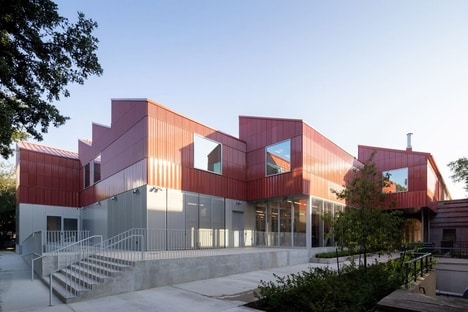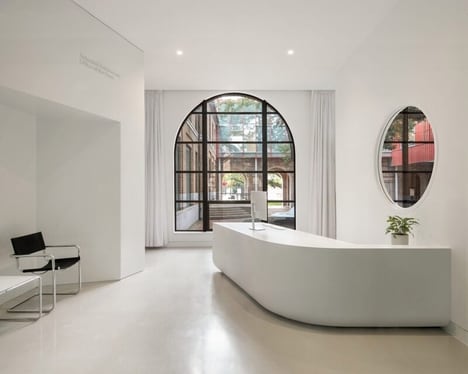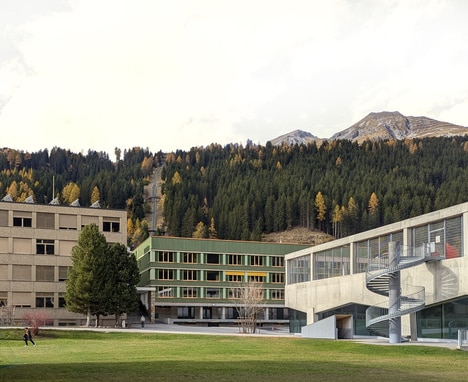

The Kuwait University Administration Facilities by Skidmore, Owings & Merrill — also known as SOM — represent a transformative architectural endeavor that redefines the academic core of Kuwait’s premier public university. Located in Shadadiya, this expansive complex comprises six interconnected buildings, including a library, a cultural center, a conference facility, and the iconic Pearl theater. In total, the development spans 270,822 square meters. With its enhancements to the public university SOM aims to centralize a previously dispersed campus while addressing the needs of 40,000 students with a 21st-century hub for education, collaboration, and cultural exchange.
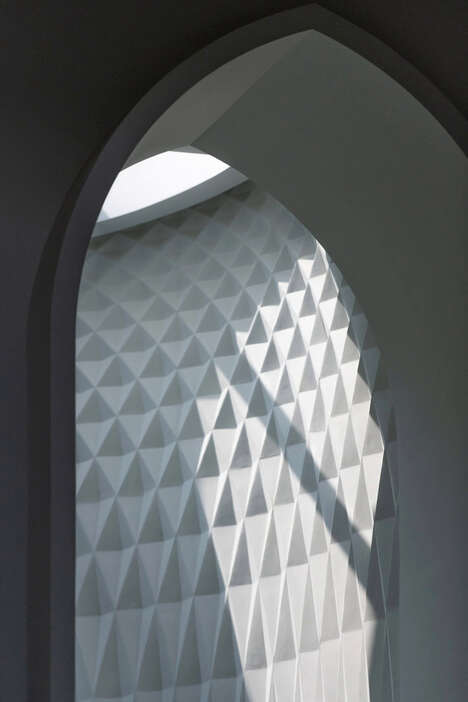
The architecture thoughtfully integrates Kuwaiti heritage with modern sustainability, most notably through its reinterpretation of traditional mashrabiya screens. These intricately patterned facades were developed in collaboration with Kuwaiti artist Farah Behbehani. They merge Arabic calligraphy with geometric precision, providing solar shading, natural ventilation, and dynamic light play across interiors. The screens extend to outdoor spaces, where veranda gardens, water features, and shaded walkways mitigate the extreme desert climate.
Image Credit: Dave Burk
Why This Trend Is Growing
- Heritage-integrated Architecture
- The fusion of traditional design elements with modern sustainability in architecture presents new ways to preserve cultural identity while optimizing building performance.
- Campus Centralization
- Centralizing university facilities into interconnected hubs enhances academic collaboration and reduces logistical inefficiencies.
- Climate-responsive Design
- Architectural designs that incorporate features such as solar shading and natural ventilation adapt buildings to extreme climates, enhancing energy efficiency.
- Hybrid Academic-cultural Spaces
- The creation of spaces that blend educational and cultural functions stimulates a diverse environment conducive to holistic student development.
Industries Being Reshaped
- Sustainable Architecture
- The blend of modern and traditional design elements using sustainable practices opens avenues for reducing a building's environmental impact.
- Higher Education Infrastructure
- Innovation in the design of interconnected university campuses responds to the evolving needs of modern educational environments.
- Art-integrated Construction
- Incorporating local art into architectural projects reflects community identity and offers a unique aesthetic appeal in construction practices.