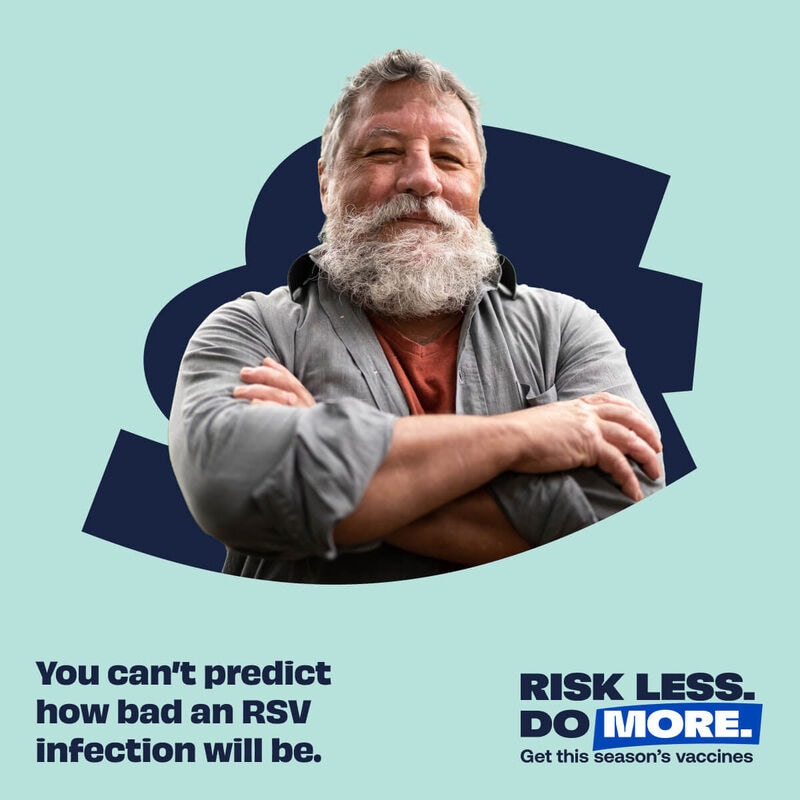
The U.S. Department of Health and Human Services (HHS) has launched a new public education campaign, called 'Risk Less. Do More.,' with the hopes of promoting vaccines for influenza, COVID-19, and respiratory syncytial virus. This campaign is aimed at increasing public awareness and vaccine uptake in preparation for the upcoming respiratory virus season.
The public education campaign addresses important health concerns by providing evidence-based information about preventing severe illness from common respiratory viruses. The Risk Less. Do More. initiative will focus on educating the public about the benefits of these vaccines, especially for high-risk groups such as older adults, long-term care residents, pregnant individuals, and those in rural or underserved areas. The campaign will use a variety of media channels, including TV, radio, social media, and print, to reach a broad audience.
Image Credit: U.S. Department of Health and Human Services
What's Driving This Trend
- Health-awareness Campaigns
- Innovative public health campaigns are increasingly using diverse media channels to enhance vaccine uptake and address health concerns.
- Targeted Healthcare Messaging
- Tailored messaging targeting high-risk groups exemplifies a focused approach to preventing severe illness from common respiratory viruses.
- Multi-channel Public Outreach
- Employing various media platforms in public health initiatives broadens the reach and effectiveness of educational campaigns.
Who This Affects Most
- Public Health
- The public health sector is leveraging comprehensive education campaigns to boost vaccine awareness and uptake.
- Television and Radio Broadcasting
- Broadcasting industries are instrumental in disseminating critical health information through television and radio channels.
- Social Media Marketing
- Social media platforms offer dynamic ways to engage audiences with evidence-based health information and updates.