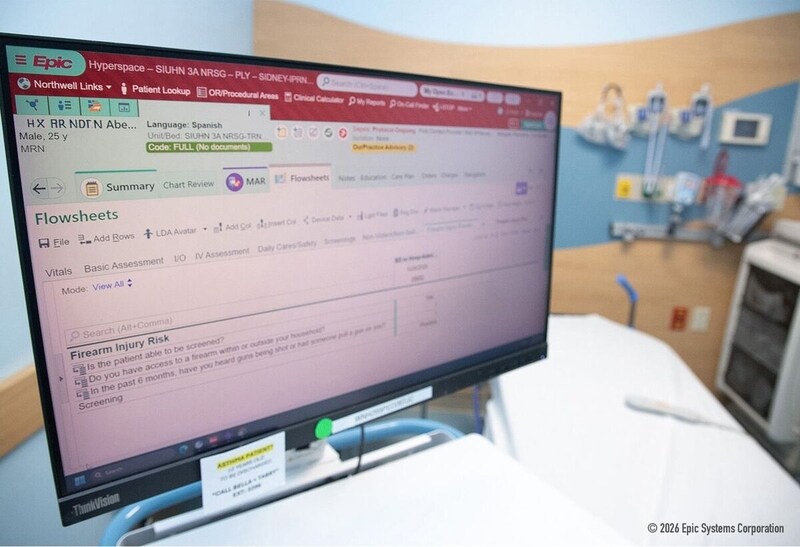
Northwell Health is expanding preventive violence screening through the integration of its firearm safety assessment tool into Epic’s electronic health record platform. The screening protocol enables healthcare providers to identify patients who may be at risk of firearm-related injury, connect them with appropriate support services, and collect standardized data that can inform future prevention efforts. By embedding the process directly into existing clinical workflows, health systems can incorporate firearm safety discussions into routine patient care alongside other established health assessments.
The development reflects a growing focus on using healthcare technology to address broader public health challenges. As hospitals increasingly adopt data-driven prevention strategies, integrated screening tools may help organizations identify risks earlier and deliver timely interventions. Standardized data collection can also support research, improve outcomes, and guide future policy decisions. For healthcare providers, embedding preventive assessments into existing systems offers a scalable approach to expanding patient support while improving operational consistency across large networks.
Image Credit: Epic Systems Corporation
Why This Trend Is Growing
- Embedded Risk Screening
- Clinical workflows are evolving into preventive intelligence systems where behavioral, safety, and social risk assessments can be surfaced during routine care without adding separate patient intake channels.
- Public Health Data Integration
- Standardized screening data within electronic health records creates new potential for population-level risk mapping, predictive analytics, and evidence-based prevention strategies across health networks.
- Preventive Safety Care
- Firearm safety conversations in medical settings signal a broader shift toward treating violence prevention as a measurable health concern supported by referral pathways and longitudinal care data.
Industries Being Reshaped
- Healthcare Technology
- Electronic health record platforms are becoming infrastructure for real-time prevention programs that combine clinical documentation, decision support, and cross-system reporting capabilities.
- Public Health
- Data-driven violence prevention initiatives provide public health organizations with richer surveillance models for identifying emerging community risks and evaluating intervention outcomes.
- Behavioral Health
- Integrated firearm risk assessments expand the role of behavioral health services by linking safety concerns, crisis support, and preventive counseling within mainstream medical encounters.