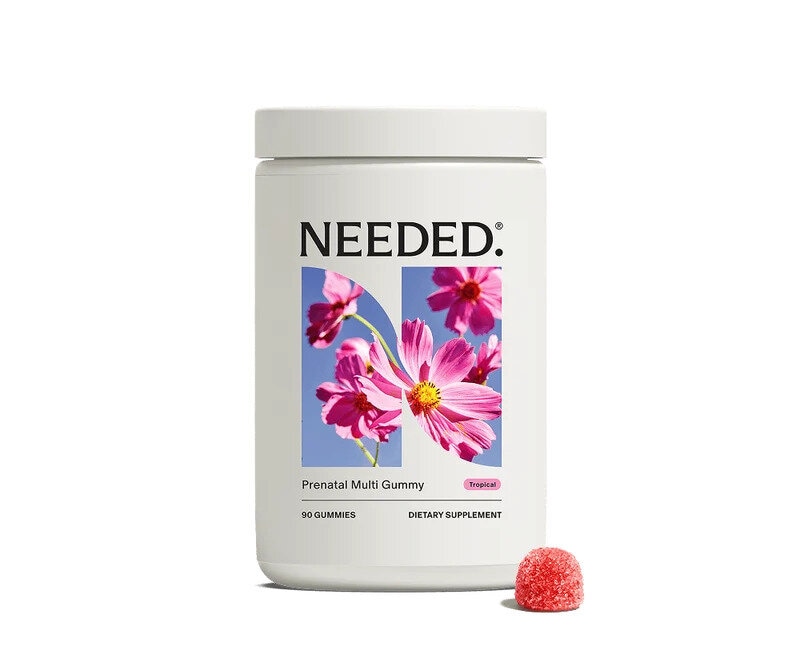
Women's supplement company Needed launched its 'Prenatal Multivitamin Gummy,' developed over four years to address a gap in the gummy prenatal category, where limitations in nutrient stability and taste have resulted in under-dosed products. The gummy delivers eight times the nutrition of the leading gummy competitor and four times the average of leading capsule prenatals.
Each three-gummy serving includes clinically studied doses of methylfolate, vitamin D3, B6, B12, selenium, zinc and choline, based on an IRB-approved clinical study. The product is available in Orange-Pineapple-Passionfruit and Strawberry-Banana flavors and is free from synthetic dyes, artificial sweeteners and high-fructose corn syrup.
As gummy formats continue to outpace the broader prenatal supplement category in growth, Needed's approach shows how brands are working to close the sector's nutrition gap.
Image Credit: Needed
Key Themes Behind This Trend
- Clinically Dosed Gummies
- Gummy supplements are evolving from convenience-first formats into evidence-backed delivery systems, creating space for premium products that match capsule-level efficacy with better consumer adherence.
- Prenatal Nutrition Upgrades
- Higher-potency prenatal formulations reflect growing demand for pregnancy products that address nutrient gaps without compromising taste, format, or ingredient transparency.
- Clean-label Maternal Wellness
- Dye-free, naturally flavored, and low-additive prenatal products signal a broader shift toward maternal wellness offerings that combine medical credibility with everyday consumer trust.
Where This Applies
- Prenatal Supplements
- The prenatal supplement market is being reshaped by formats that deliver clinically meaningful nutrient levels while appealing to consumers who prefer gummies over pills.
- Functional Confectionery
- Nutrient-dense gummy innovations blur the line between candy-like formats and therapeutic wellness products, expanding the role of confectionery technology in health applications.
- Women's Health
- Personalized and life-stage-specific nutrition products are strengthening the women’s health sector by targeting underserved needs with clinically informed consumer goods.