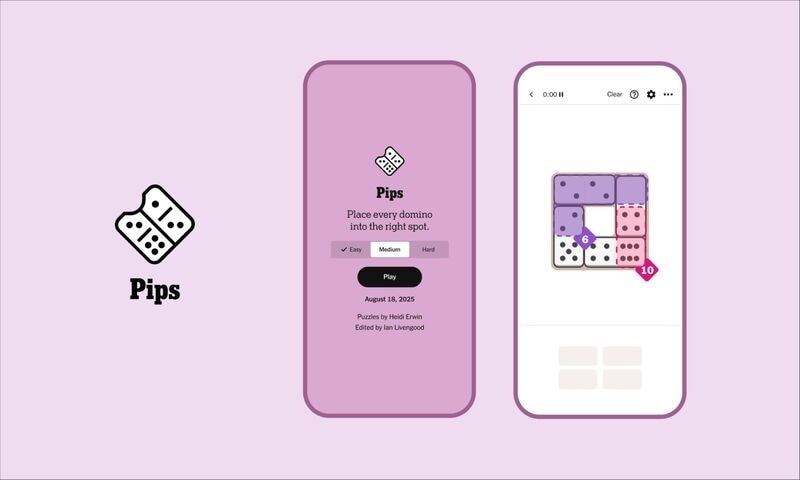
The New York Times adds Pips as its first original logic puzzle, combining domino placement with regional math constraints to deliver a tactile logic challenge. Players rotate and place dominoes onto a grid of color-coded zones, each governed by rules such as sum, equality, or inequalities. The game features three daily difficulty levels: Easy, Medium, and Hard, and includes guided feedback to help players learn through trial.
It is developed from a prototype tested during a Game Jam and beta-launched earlier this year, Pips emphasizes clarity in both its mechanics and visual communication. A “How to Play” tutorial introduces new players to the symbols and game flow. By expanding beyond word-based puzzles, Pips broadens accessibility and appeals to logic-based problem solvers. As The New York Times’ first original logic title, it complements the existing puzzle lineup with fresh spatial reasoning content.
Image Credit: NY Times
What Makes This Trend Stand Out
- Spatial Reasoning Games
- Development in spatial reasoning games offers opportunities to engage logic problem solvers with visually interactive challenges.
- Diversity in Puzzles
- Expanding puzzle options beyond word-based formats caters to a broader audience and encourages diverse cognitive engagement.
- Guided Learning Mechanisms
- Incorporating guided feedback in games fosters a learning environment where players can improve their skills through structured exploration.
Sectors Adopting This
- Game Development
- The rise of new logic puzzle formats presents game developers with the chance to innovate in creating engaging and educational game experiences.
- Edtech
- Educational technology can harness these puzzle concepts to develop platforms that enhance critical thinking and logic skills in learners.
- Media and Publishing
- The inclusion of original content like logic puzzles in media outlets offers a unique avenue for expanding reader engagement and retention.